Neighbourhoods
The ground floors tell you where a street is going
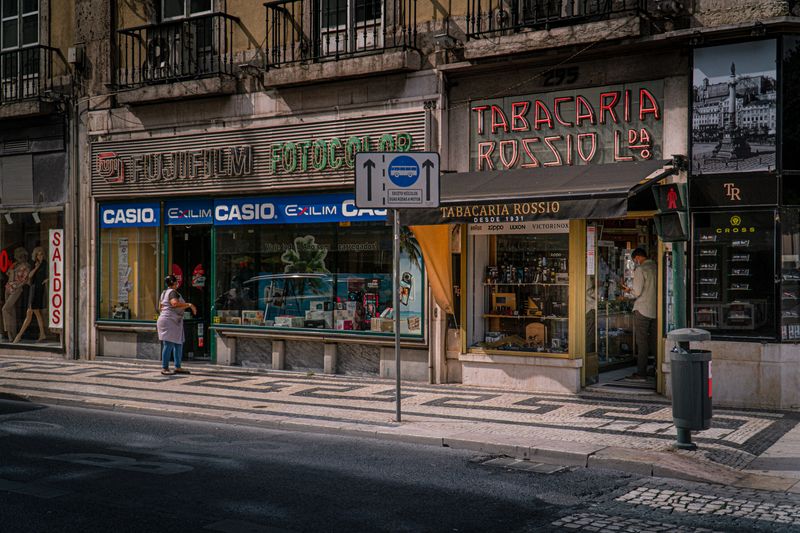
Shopfronts are the leading indicator of neighbourhood change. Read them and you can tell who a street currently serves and who it will serve next.

The theory of ground-floor shopfronts is well covered elsewhere. This is about the version you meet in practice.
What holds up in practice
- Some shops can only survive on resident custom.
- Others can only survive on visitor custom, and they cluster.
- A shuttered ground floor is usually a decision, not a failure.
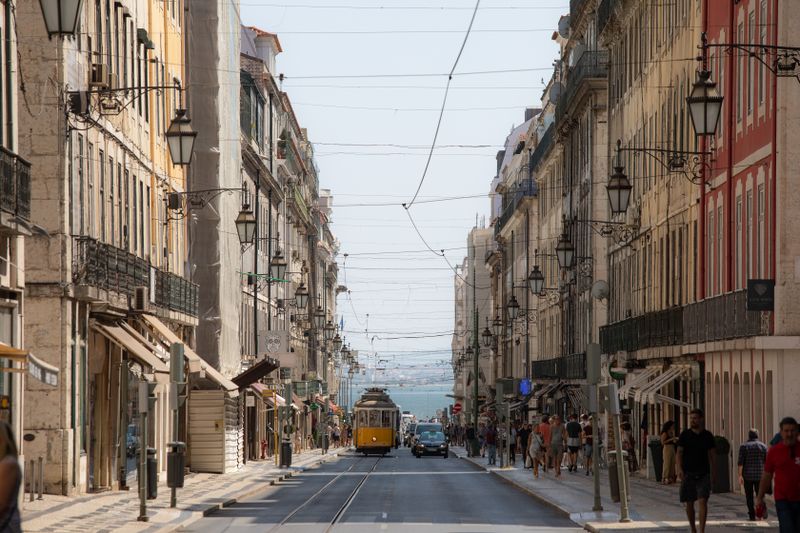
A street is legible from its doorways
Retail responds to changes in who lives nearby faster than buildings, signage or population statistics ever do. A shop signs a lease for a few years and has to be right about its customers, which makes the shop mix a continuously updated forecast.
That is why a five-minute walk noticing what the ground floors sell tells you more than an hour of reading about a district. The method works in any city, but it is unusually clear here because so many old premises are small and single-purpose. You are reading two things at once: who the street serves today, and what somebody betting money thinks it will serve tomorrow.
Shops only a resident supports
A cobbler, a haberdasher, a hardware shop, a key cutter and a dry cleaner all depend on people who come back repeatedly and live within walking distance. None of them can survive on visitors, because nobody buys curtain hooks or has shoes resoled while on a short trip.
The same goes for a butcher, a fishmonger and a bakery selling bread rather than pastries, which need a daily rather than an occasional customer. A street with several of these has a real resident population, whatever else it also has. When they start closing one by one and are not replaced by anything similar, the resident base is thinning even if the street looks busier.
Shops only a visitor supports
Luggage shops, sim card counters, sunglasses racks, tile souvenirs and anything selling tinned fish as a gift are visitor-facing by construction. They cluster tightly, because visitors move along predictable routes and a shop needs to be on that route rather than near it.
In practice, their arrival is not itself a problem; a city with visitors will have shops for them, and those shops employ people. The signal to watch is substitution rather than addition — whether they are filling empty units or replacing the resident-facing ones. A street where the last grocer became a souvenir shop has changed in a way that a street with a new souvenir shop in a vacant unit has not.
What a shuttered ground floor means
A closed shutter on a busy street is rarely simple failure, because a viable premises on a good street finds a tenant quickly. More often it means an owner is holding the space, waiting for a building-wide renovation, a change of use permission or a better offer. Long-running vacancy can also mean an inheritance dispute or a building whose ownership is split among many descendants and cannot act.
Where it helps most, you can sometimes tell which by looking up: scaffolding, new windows or a building permit notice suggests a plan rather than a stalemate.
A row of shutters on a street with good footfall is one of the strongest signals that the whole block is about to change.
Why old leases froze some streets
Long-standing rent controls on commercial leases kept many old shops trading for decades at rents far below market level. That preserved an extraordinary amount of pre-war retail, which is a large part of why the city still has shops other places lost.
It also meant owners had no income to maintain buildings, which is a real part of why some facades decayed so badly. When those protections were reformed, a wave of closures followed, concentrated exactly where the gap between old and market rent was largest. That is the mechanism behind a great deal of what people describe as the city changing, and it is a legal history rather than a cultural one.
Using this when you choose where to stay
If you want a neighbourhood that still functions, count the resident-facing shops within a few minutes of the door you would be sleeping behind. A grocer, a bakery and a café with a counter of regulars is a better indicator of a good stay than any description in a listing.
Put simply, if every ground floor within sight is visitor-facing, you have chosen a district that empties out and will be loud at night. The check takes minutes on a street view before booking and is more reliable than reviews, which mostly describe the flat rather than the street. It is also the single best way to find quieter, cheaper quarters that nobody has written a guide to yet.
The takeaway
Read the ground floors before you read the reviews. They are the honest forecast.
Pick the one that costs you least, and let the rest wait.
Questions readers ask
What is the fastest signal of a changing street?
A resident-facing shop replaced by a visitor-facing one. Substitution matters far more than a new shop filling an empty unit.
Why are there so many closed shutters?
Usually owners holding space for renovation or a change of use, or buildings tangled in shared ownership, rather than simple business failure.
Also by Inês Carvalho
- How to order coffee in Lisbon without overthinking itCafés & Coffee
- The hills are the transport systemPracticalities
- Sintra in a day, done properlyDay Trips
- What catches visitors outPracticalities