Neighbourhoods
What a street tells you before you order anything
The cafes on a block are a fairly honest census of who is on it, if you know what to look at.
This is less a set of instructions about reading a neighbourhood than an argument, and it is worth saying so at the start.
The argument in brief
- Counter length relative to seating shows whether trade is local or lingering.
- Opening hour reveals whether a place serves workers or visitors.
- Menus in four languages are a reliable marker of the tourist route.
Counter versus tables
A long counter with a narrow standing strip is built for many quick customers who live or work nearby. A room dominated by tables with a small serving hatch is built for people staying an hour, which usually means visitors or students. The ratio tells you more about the street than anything on the menu does.
Both models exist a hundred metres apart in most of the city.
The first hour of the day
A café open before most people leave for work is serving people who work, and its trade will be regulars by name. A café that opens mid-morning is serving people whose day starts loosely, which in central areas means tourism. Watching who is inside at that first hour tells you the composition of the street more accurately than any statistic would.
Neighbourhoods change on this measure faster than they change on rent.
Menu language and format
A price list printed on a board behind the counter, in Portuguese only, is aimed at people who already know what they want. A laminated menu with photographs and four languages is aimed at people who do not.
Put simply, neither is dishonest, but they are pricing for different customers and the difference is usually visible in the totals. The photograph menu also tends to signal a wider range than a small kitchen can genuinely cook well.
What is on the television
Football, a rolling news channel or a phone-in on the radio indicates a room built around people who come in regularly. Silence and a playlist indicates a room designed as a setting rather than a habit. Neither is better; they are simply different businesses using the same shopfront type.
The noisy version is where you will hear the least English.
Signs of turnover on the block
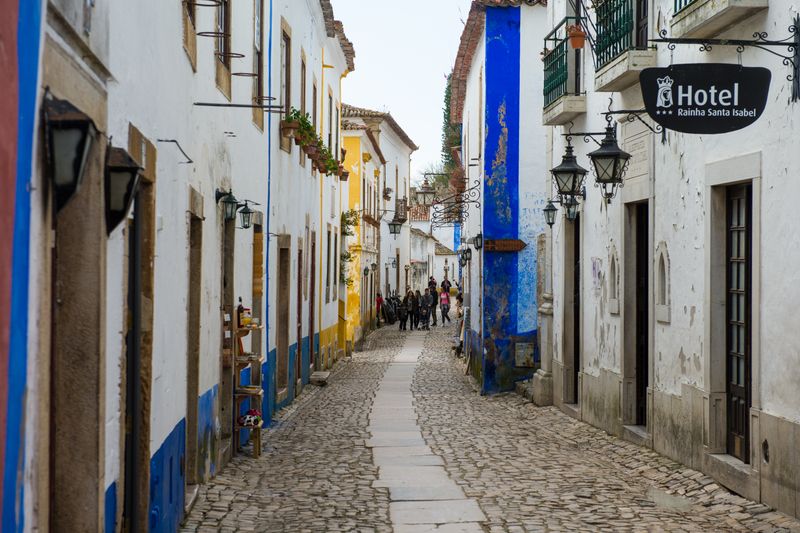
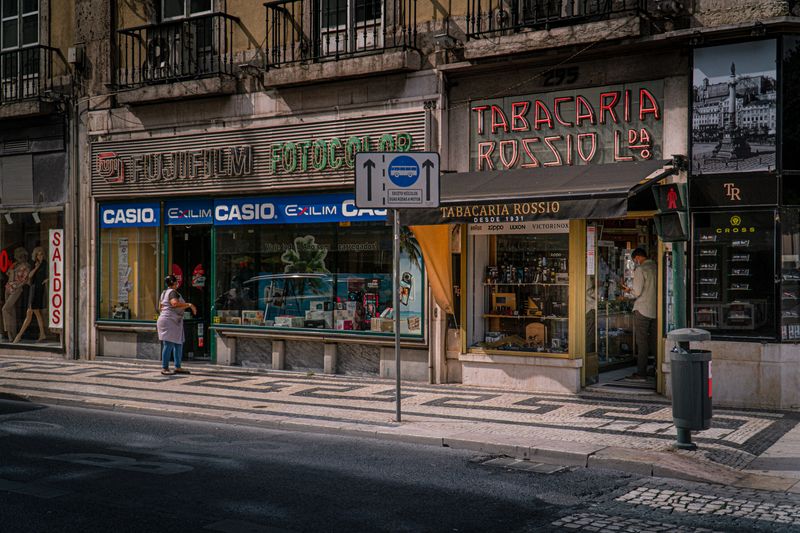
Freshly renovated frontages between shuttered ones usually mean a street that is changing hands quickly. Very old signage, worn tiling and a business that clearly predates the current street is the opposite signal.
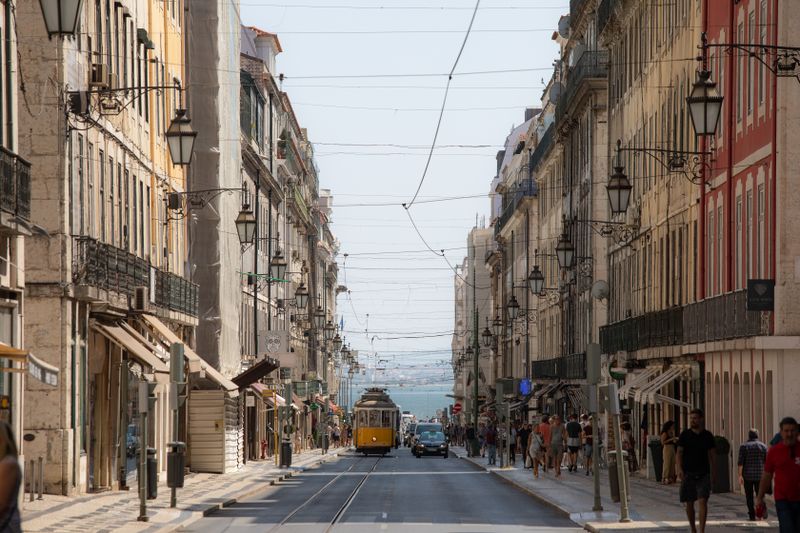
Lisbon has real and contested pressure on ground-floor rents in central areas, and shopfronts turn over visibly as a result. You can read that pressure walking a street without needing anyone to explain it.
Some of this will suit you and some will not, and that is the point.
Using this without romanticising it
A traditional café is not automatically better, cheaper or friendlier than a new one. Some very old rooms serve poor coffee out of habit and some new ones are excellent and locally owned. The point of reading a street is to choose deliberately rather than to perform authenticity.
Where it helps most, where you spend money is a small vote about which of these survives, and it is worth spending it consciously.
The takeaway
Look at the counter, the clock and the language of the price list before you sit down.
Small and repeatable beats ambitious and abandoned, almost every time.
Questions readers ask
Are old cafes always cheaper?
Usually but not reliably. A long-established café on a heavily visited square can charge as much as anywhere, and a modern place on a residential street can be very reasonable.
Is it rude to walk in, look and leave?
Not at all. People do it constantly. A nod on the way out costs nothing and is normal.
Also by Helena Sá
- Alfama, Graça and the difference two streets makeNeighbourhoods
- Roast level is a decision about acidity, not about strengthCafés & Coffee
- Why the same beans taste different in two cafesCafés & Coffee
- Portuguese espresso is not a smaller Italian oneCafés & Coffee