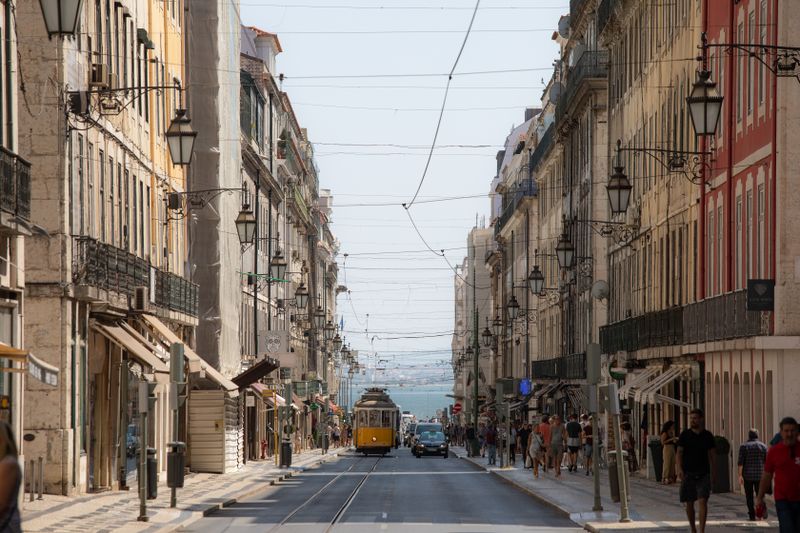
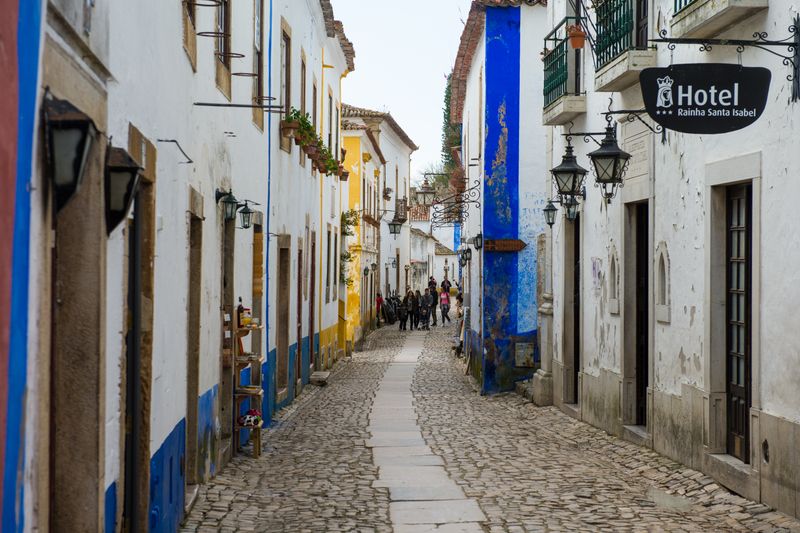
Neighbourhoods
Viewpoints without the queue
The famous miradouros are famous for good reason and are not the only places with the view.
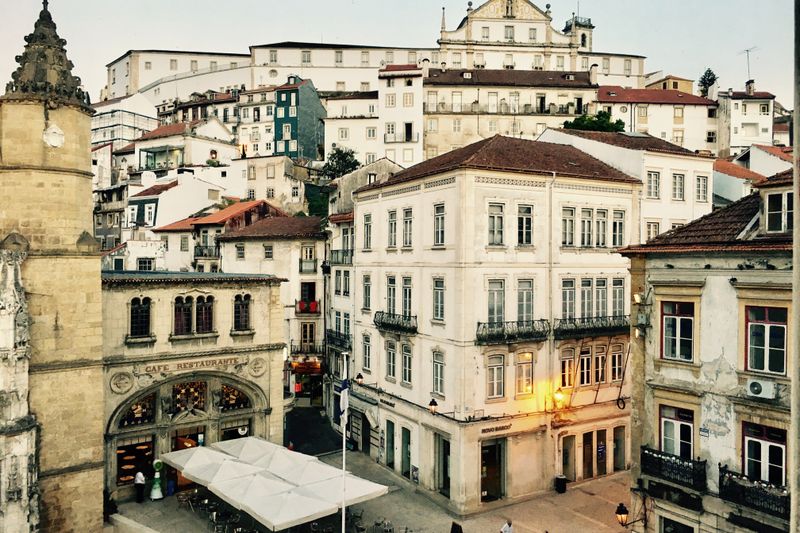
Everything below about viewpoints comes from what actually happens rather than from what is supposed to.
What holds up in practice
- Sunset at the well-known viewpoints is genuinely crowded.
- Ordinary streets and cemeteries offer comparable views with nobody there.
- The light is better in the morning from several of them.
Why they are crowded
A handful of viewpoints appear in every guide and every photograph, and everyone arrives at sunset. They are pleasant places and are at their least pleasant at the exact moment most people visit.
Going an hour or two earlier changes the experience entirely and the light is often better. A terrace that sits on the walking line between two sights collects everybody passing whether or not they came for the view, which is why two viewpoints with almost identical outlooks can be heaving and deserted on the same evening.
The city is full of unofficial ones
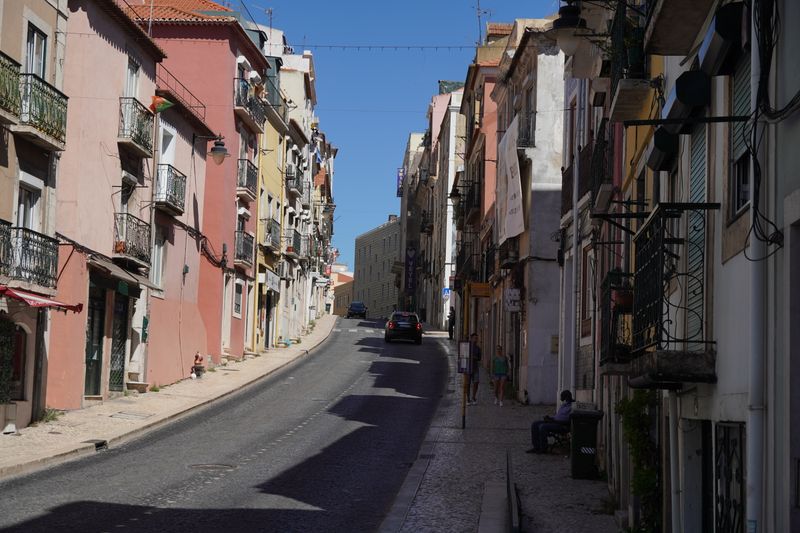
Because of the topography, ordinary residential streets frequently open onto substantial views. Walking uphill in almost any old neighbourhood produces several, none of them named or busy.
These are where residents actually sit. The reliable tell is a street that ends in a low wall or a flight of steps instead of continuing, because that is where the hill drops away, and any map will show you those dead ends if you go looking for them deliberately.
Consider the direction of light
Several well-known viewpoints face into the afternoon sun, which is poor for photographs and uncomfortable to sit in. The same viewpoints in the morning are shaded, cooler and empty.
Working out which way a viewpoint faces before going is a small effort with a large return. Morning also buys cleaner air, since haze off the river and the day's traffic gradually flattens the far bank into a grey band by late afternoon, which no amount of editing afterwards will recover.
Elevated public spaces
Terraces of some public buildings, park edges and the higher cemeteries offer wide views and almost no crowds. Several are free and open through the day.
They are quiet because they are not on the standard route rather than because they are worse. They also keep institutional hours rather than terrace hours, shutting firmly and early, and some expect a quiet that a public square does not, which is a large part of why they stay pleasant.
Kiosks and the sitting culture
Many viewpoints have a kiosk selling drinks, and sitting for an hour is entirely the intended use. Prices are modest and nobody hurries you. This is one of the genuinely characteristic pleasures of the city and costs very little.
The little pavilions are a revived nineteenth-century form rather than a recent idea, licensed to stand on public ground, which is why they appear in squares and on terraces instead of behind a shopfront and why the chairs around them belong to everybody.
If that does not fit your week, it is not a failure of willpower.
Learning to read what you are looking at
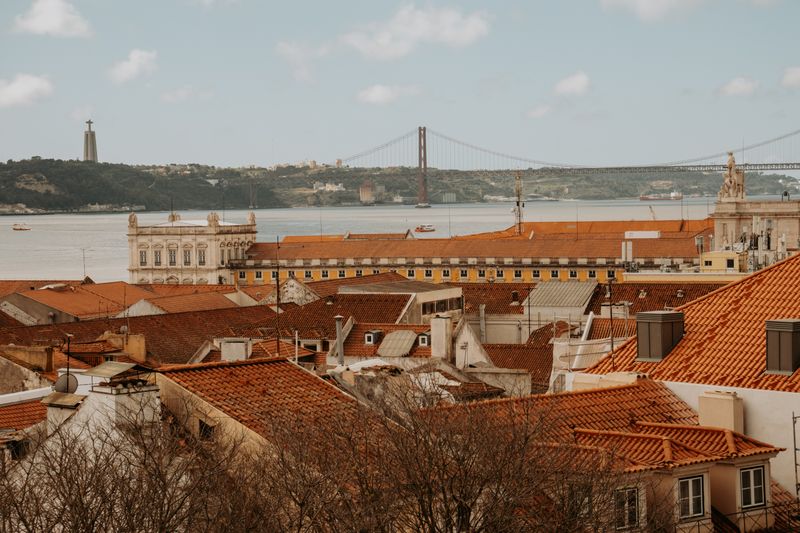
What reads as the sea from most terraces is an estuary, and its width is why the far bank looks like a separate country of low hills rather than the other side of a river. The pale grid below with the uniform roofline is the town rebuilt after 1755, and the tangle of orange tile climbing the slope beside it is what the earthquake spared, so the outlook is a map of that morning as much as a view. Picking out the hills, the bridge and the bend of the river once gives you an orientation that then works from every other terrace in the city.
It also tells you where to walk next, because from a height you can see which streets below climb and which contour around the slope, which is information no map hands over half as quickly.
The takeaway
Go in the morning, walk uphill anywhere, and sit down at the kiosk.
The version you keep doing is the version that works.
Questions readers ask
When is the best time for photographs?
Early morning gives soft light and empty viewpoints. Sunset is beautiful and crowded; the hour before it is a reasonable compromise.
Are the viewpoints free?
The public ones are. A few elevated terraces attached to attractions charge, and are usually not necessary given the alternatives.
Also by Duarte Ferreira
- Tiles are cladding, not decorationNeighbourhoods
- The staircase streets and how they organise a hillNeighbourhoods
- Two microclimates: the riverside and the ridgeNeighbourhoods
- What happens in a square, and whenNeighbourhoods