Neighbourhoods
How an old apartment building actually works
The building types here have consistent logic, and knowing it explains light, noise, damp and where the good flats are.

There is a settled way of talking about apartment buildings. It is worth asking how much of it survives contact with the detail.
The argument in brief
- Interior light wells serve rooms that have no external wall.
- Shutters, not curtains, do the thermal and light work.
- Top floors are the hottest in summer and the coldest in winter.
The plan is long and narrow
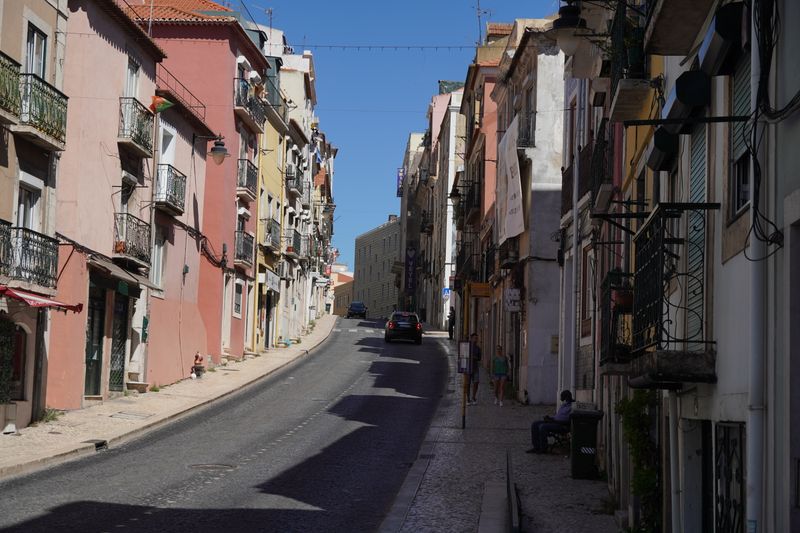
Typical older blocks are deep and narrow, with rooms strung along a corridor between a street façade and a rear one. That means the best rooms are at the two ends and the middle of the flat relies on borrowed light.
Interior light wells cut down through the building to serve those middle rooms with air and a little daylight. A flat described as having four rooms may have two with real windows.
Light wells carry sound
A light well is a vertical shaft connecting every flat in the building, and it transmits sound extraordinarily well. Conversations, televisions and kitchen noise travel up and down it with very little loss. Kitchens and bathrooms usually open onto it, which is why cooking smells circulate through a building.
The useful part is this: a bedroom facing a light well is quieter from the street and much less private from the neighbours.
Shutters do the work
External or internal wooden shutters are the traditional control for light and heat and are far more effective than curtains. Closing them on the sunny side through a summer day keeps a flat measurably cooler.
They also provide the blackout that thin curtains do not, which matters with early summer sunrises. Missing or broken shutters are a real defect rather than a cosmetic one.
Floors are not equal
The top floor gets the light and the view and sits under an uninsulated roof, so it bakes in August and loses heat in January. The ground floor is cooler, darker, damper and more exposed to street noise and to security concerns. Middle floors are the compromise most residents prefer, particularly with a lift.
Many older buildings have no lift at all, which changes everything about a fourth-floor flat.
Services were added later
Plumbing, wiring and gas were retrofitted into buildings that predate all three, often more than once. That is why pipes run on the outside of walls, why circuits trip and why bathroom locations look arbitrary. Gas water heaters on the kitchen or balcony wall are common and need servicing and ventilation.
Renovation quality varies enormously between adjacent flats in the same building.
The shared parts
Buildings are run by an owners association that manages the stairwell, roof, façade and any lift. Monthly condominium charges cover that, and major works can trigger significant one-off assessments. For renters this mostly appears as scaffolding and noise; for buyers it is a real financial consideration.
For most people, anything with legal or financial consequences here needs a qualified professional rather than a general article.
Balconies, washing and the glazed-in ones
Rear balconies are working space rather than leisure space, carrying the washing line, the gas bottle and frequently the water heater, which is why the back of one of these buildings looks nothing like the front. Enclosing a balcony in glass to gain a room is extremely common and often done without permission, which can produce both a legal problem when the flat is sold and a condensation trap every winter.
For most people, drying outdoors works for most of the year here, which is a large part of why so few flats own a dryer, and it becomes a genuine domestic problem across a wet fortnight in January. Anything hanging over a public street is regulated in most municipalities, and a line strung across a lane is one of the few laundry arrangements that reliably attracts a complaint.
The takeaway
Check the shutters, the floor, the light well and whether there is a lift, in that order.
Pick the one that costs you least, and let the rest wait.
Questions readers ask
Should I avoid a flat facing a light well?
Not necessarily. It is quieter from the street and darker, and the sound transmission between flats is the thing to test by visiting when neighbours are home.
Is a top floor worth it?
For light and views, often. For summer heat and winter cold under an uninsulated roof, frequently not. Ask about roof insulation and air conditioning.
Also by Helena Sá
- Alfama, Graça and the difference two streets makeNeighbourhoods
- Roast level is a decision about acidity, not about strengthCafés & Coffee
- Why the same beans taste different in two cafesCafés & Coffee
- Portuguese espresso is not a smaller Italian oneCafés & Coffee