Eating
Wine by the glass, at lunch, without ceremony
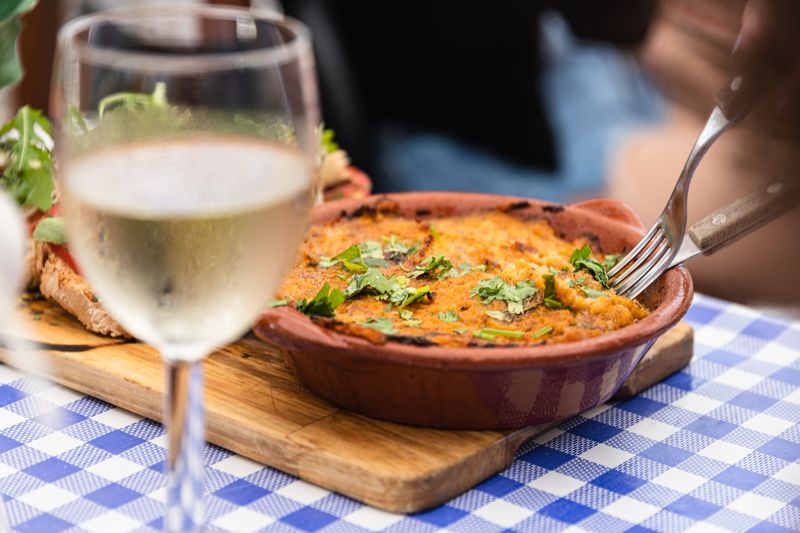
A glass of wine with a weekday meal is ordinary here, and the house option is usually the sensible order.

This works through wine at lunch in the order the parts actually depend on each other.
The short version
- House wine is served by the glass or jug and is inexpensive.
- Portugal grows a very large number of native grape varieties.
- Regional wine in a small restaurant is usually local and unlabelled.
A glass with the meal is normal
Wine with lunch is unremarkable, including on a working day, and nobody treats it as an event. It is ordered by the glass or in a small jug rather than by the bottle. Water, wine and bread arriving together is the standard shape of a simple table.
Ordering only water is equally unremarkable, so neither choice draws attention.
House wine and what it is
The house pour is usually a regional wine bought in bulk, sometimes from a producer the owner deals with directly. It is cheap, straightforward and matched to the food the kitchen cooks. Quality varies from very good to merely functional and the price makes the risk small.
Where it helps most, asking where it comes from is a normal question and often gets an enthusiastic answer.
A very deep grape catalogue
Portugal cultivates a large number of indigenous grape varieties that are grown almost nowhere else. That is why wine lists here are full of names unfamiliar to people who know French and Italian wine.
The useful part is this: blending several native varieties is the traditional approach rather than the exception. It also means tasting your way through is genuinely a process of discovery rather than a comparison exercise.
The green wine confusion
The lightly effervescent, low-alcohol white from the north is named for its youth, not for its colour. It is drunk very cold, young, and is designed for hot weather and seafood. Serious producers in that region also make still, structured wines that share nothing with the supermarket version.
Ordering it expecting a rich white will be a disappointment for reasons that are about expectation rather than quality.
Fortified wine is not only a dessert
The famous fortified wine from the north exists in dry white styles that are drunk chilled as an aperitif. A separate fortified tradition from further south is drunk the same way. These are everyday drinks in their regions rather than after-dinner curiosities.
For most people, asking for the dry version rather than the sweet one is entirely normal in a wine bar.
Ordering without expertise
Naming a colour, a rough price and the dish you have ordered is enough information for any waiter. In a small restaurant, asking for whatever they drink is a reliable and well-received request.
On an ordinary week, corkage, decanting and elaborate service are not features of an ordinary tasca. Drink-driving limits are strictly enforced and are lower than in some countries, so check the current limit if you are driving.
Temperature does most of the work
Local reds are frequently served cooler than a northern European expects, straight from an unheated back room, and that is the right way round rather than a sign of carelessness. A warm red in a hot dining room reads as alcoholic and flabby, because heat pushes the alcohol forward and flattens the acidity that was holding the whole thing together. Twenty minutes in a fridge does more for an ordinary red at lunch in July than any amount of swirling, and asking for it cool is an entirely unremarkable request.
Put simply, whites in the same rooms tend to go the other way and arrive so cold that almost nothing comes through, which fixes itself if you simply leave the glass alone for a few minutes.
The takeaway
Order the house glass, ask where it is from, and stop worrying about it.
Small and repeatable beats ambitious and abandoned, almost every time.
Questions readers ask
Is house wine safe to order?
Generally yes, and it is what most people at the table around you are drinking. The price is low enough that a poor glass is a small loss.
Do I tip on wine?
Tipping practice varies and is modest by North American standards. Rounding up the bill is common; a percentage on the wine specifically is not a convention here.
Also by Inês Carvalho
- How to order coffee in Lisbon without overthinking itCafés & Coffee
- The hills are the transport systemPracticalities
- Sintra in a day, done properlyDay Trips
- What catches visitors outPracticalities