Eating
The pastelaria is four businesses in one room
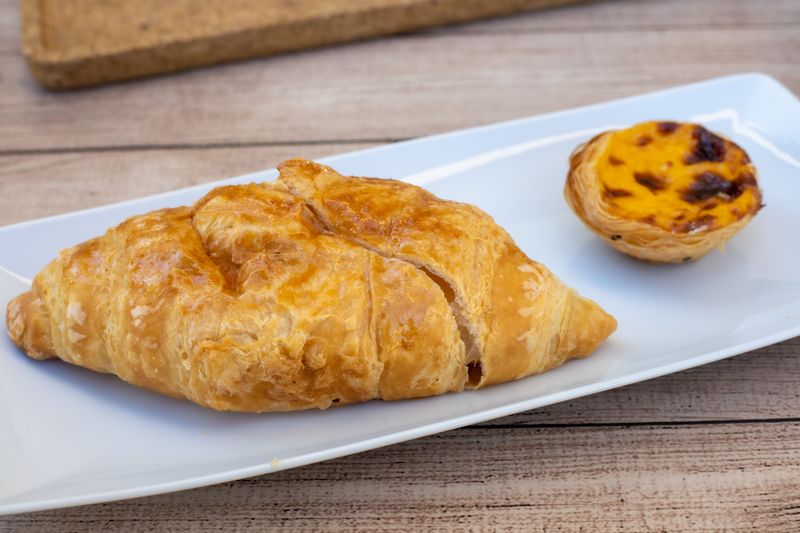
The Portuguese neighbourhood pastelaria is a bakery, a cafe, a lunch counter and an evening bar, which is why it is open all day.
What follows is the working version of the pastelaria: the decisions in the order you actually meet them, with the reasoning attached.
Before you start
- A single licence and a single counter run several trades in sequence.
- It is open through the gaps when restaurants are closed.
- The formica-and-steel interiors are period fittings, not styling.
One counter, several trades
The same glass case that sells pastry in the morning sells savoury snacks at midday and something with a beer in the evening. That stacking of trades is what makes a small room viable in a neighbourhood with limited footfall.
It also means the pastelaria is open during the long afternoon when restaurants have closed their kitchens. For a visitor, this makes it the reliable answer to being hungry at the wrong time.
The social function
In many streets it is the only place with no admission, no booking and no expectation of spending much. Older residents use it daily, often at the same time and often standing in the same spot. Staff know names, orders and family news, which is a form of neighbourhood infrastructure rather than sentiment.
In practice, the loss of one of these rooms to a rent increase removes something a street does not easily replace.
The fittings tell the age
Chrome, formica, patterned tile and a heavy steel espresso machine are typical of mid-twentieth-century fitouts. Many surviving rooms have not been refurbished since, which is why they look coherent rather than styled. A recently opened place imitating that look is easy to spot: the wear is in the wrong places.
Neither is dishonest, but only one of them is a period interior.
What to eat and when
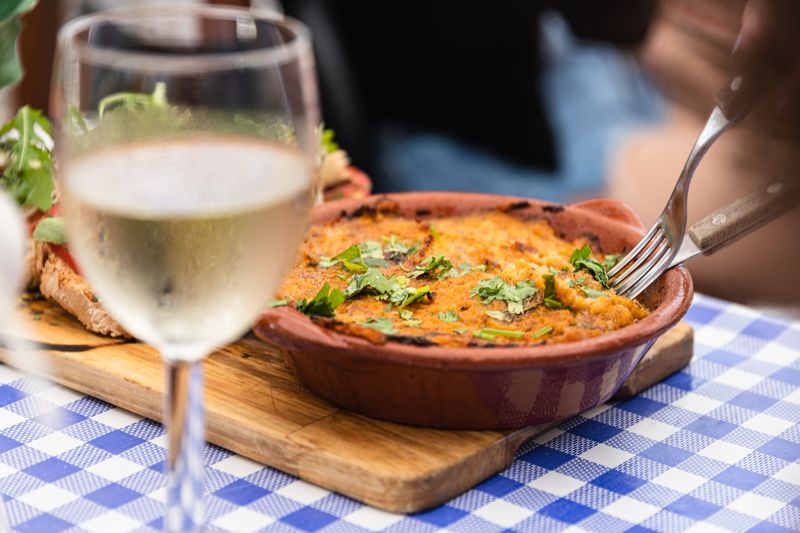
Morning is pastry and coffee, and this is the strongest hour. Midday may bring a small set lunch, often a single dish written on a board. Afternoon is savoury snacks and cake; evening is beer, wine and whatever is left in the case.
Ordering the wrong thing at the wrong hour is the main way to be disappointed.
Prices and how they work
These are among the cheapest places to eat and drink in the city, and the price list is usually posted. Counter service is faster and cheaper than sitting, as it is everywhere.
Paying at the end on the way out is common, and you say what you had. Small cash amounts are useful in the older ones.
They are disappearing unevenly
Rising ground-floor rents in central areas have closed a number of long-established rooms in recent years. Some have been preserved through heritage listing schemes for historic shops, with mixed results. Away from the centre they remain the ordinary default and are under much less pressure.
The useful part is this: using the ones outside the tourist streets is the version of this that actually helps.
If that does not fit your week, it is not a failure of willpower.
The other things the counter sells
Many of these rooms also carry lottery tickets, cigarettes, transport top-ups and sometimes a newspaper, all low-margin lines kept on because they bring the same people through the door at fixed points of the week. A television mounted high in one corner is close to standard, and on match nights it turns the room into something between a bar and a shared living room for people who would rather not pay bar prices.
That bundle of small functions is exactly why the pastelaria survives on a street that could not support a dedicated café, a dedicated bar and a newsagent as three separate businesses. It also explains the layout, since everything converges on a single till near the door because one person frequently has to run all of it at once.
The takeaway
When everything else is shut, the pastelaria is open, cheap and exactly what the street runs on.
Pick the one that costs you least, and let the rest wait.
Questions readers ask
Is a pastelaria different from a cafe?
In practice the words overlap heavily. A pastelaria implies a pastry counter and its own or a supplied bakery; a café may be only drinks and snacks.
Can I get a full meal?
Sometimes, at lunchtime, if the place does a daily dish. Outside that window expect snacks rather than a cooked meal.