Eating
Sugar, and why it arrives without being asked for
The sachet on the saucer is part of a coherent style of coffee, and the choice to use it is genuinely open.

This works through sugar with coffee in the order the parts actually depend on each other.
The short version
- Sugar suppresses perceived bitterness and raises perceived body.
- The default arrival of a sachet is a convention, not an instruction.
- Sweetened coffee and sweet pastry together is a lot of sugar in one sitting.
What sugar does to a cup
Sweetness competes with bitterness in perception, so a spoonful measurably reduces how bitter a dark shot reads. It also raises the perceived viscosity, which makes a thin coffee feel rounder.
What it cannot do is add flavours that were never extracted in the first place. So sugar improves a bitter coffee and does very little for a hollow one.
Why it is the default here
A dark, robusta-inflected espresso is built to be bitter and dense, and the tradition assumes sugar will balance it. The sachet arriving on the saucer is a convention that saves everyone a question.
Put simply, nobody watches whether you use it, and leaving it untouched is completely unremarkable. Treating the convention as a rule is a misreading.
The specialty position
Lighter roasts are made to show acidity and sweetness that comes from the bean itself, and sugar flattens both. Some specialty bars will politely suggest trying it without first, which is a recommendation rather than a prohibition. If a light filter coffee needs sugar to be drinkable, it was probably extracted badly.
This is a genuine difference of intent between the two scenes rather than snobbery in either direction.
Adding it well
Stirring properly matters, because sugar sinks straight through crema and settles at the bottom of a small cup. An unstirred espresso gets progressively sweeter and ends in syrup. Adding it before drinking rather than halfway through gives a more even cup.
On an ordinary week, half a sachet is a real option and nobody minds.
The total sugar of a Portuguese morning
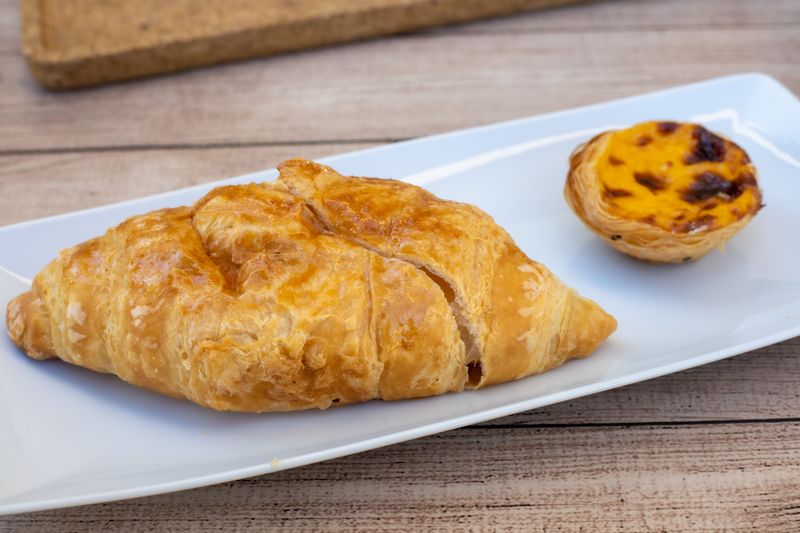
A sweetened coffee plus an egg-yolk pastry is a substantial amount of sugar before nine in the morning. That is a fact about the combination rather than a judgement, and it is a small pastry.
Anyone managing sugar intake for medical reasons should treat this as a matter for their doctor rather than a café. The savoury half of the counter exists and is just as traditional.
Alternatives on the counter
Sweeteners are widely available and asking for one is unremarkable. Brown, white and occasionally unrefined sugars appear, and the difference in the cup is small but real. Honey is rare with coffee here and asking for it will get a puzzled response in most cafés.
Nothing about any of this is policed by anyone.
None of this is a substitute for talking to a clinician if something feels wrong.
Milk is already doing some of this
Milk carries its own sugar, and steaming it warms and aerates the liquid in a way that makes that sweetness far more obvious than it ever is straight from the fridge. Milk proteins and fat also bind some of the bitter compounds in a dark shot, so a milk drink starts from a much lower baseline of bitterness than the same espresso taken alone. That is why a sachet which feels essential beside a small black cup routinely goes untouched next to a milky one, and why oversweetening a milk drink by pure habit is so easy to do.
Put simply, plant milks vary sharply on this point, since several are formulated with broken-down starches and added sugars that read as noticeably sweeter than dairy in exactly the same drink.
The takeaway
The sachet is an offer. Taste first, then decide, and stir properly if you use it.
Small and repeatable beats ambitious and abandoned, almost every time.
Questions readers ask
Will a barista mind if I add sugar to a specialty coffee?
No. Some will ask you to taste it first, which is a suggestion about their coffee rather than a rule about yours.
Is unsweetened coffee unusual here?
Not at all. Plenty of people drink it plain, and the sachet arriving is simply the default rather than an assumption about you.