Eating
The savoury counter and how to use it
Fried and baked snacks are the local answer to being hungry between meals, and their quality depends almost entirely on timing.
This works through savoury snacks in the order the parts actually depend on each other.
The short version
- Most savoury snacks are fried and are best within an hour of frying.
- They are a stopgap between meals rather than a meal.
- A hot cabinet with fast turnover is the reliable indicator.
What the category covers
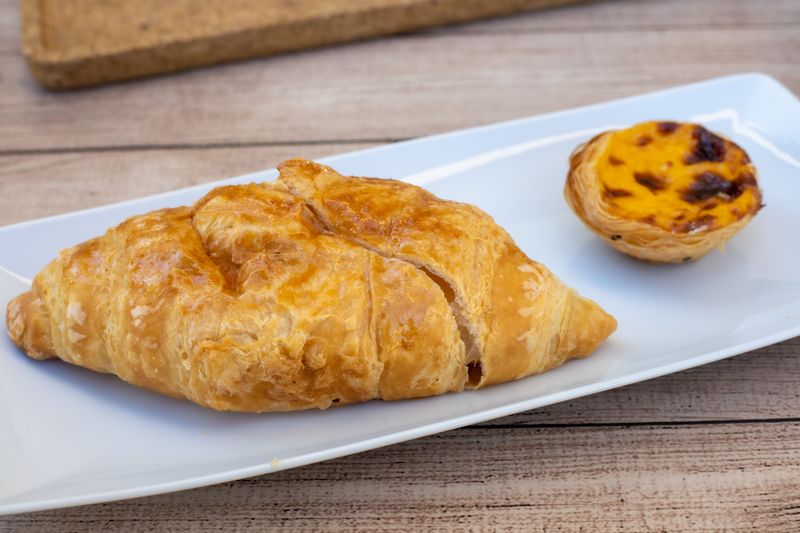
Breaded croquettes, filled fried pastries, small baked pies and pastry parcels of meat, fish or cheese. Most are a soft, well-seasoned filling inside a crisp or flaky exterior, designed to be eaten in the hand. They are ubiquitous in cafés, pastelarias and kiosks and are cheap by any measure.
They are not regional specialities to hunt for; they are the ordinary snack food of the country.
Frying and the clock
A fried snack is at its peak within the first hour, when the crust is still crisp and the filling hot. Held under a heat lamp for several hours, the crust softens and absorbs oil and the filling dries.
Where it helps most, the difference between those two states is enormous and explains most bad experiences with them. Buying where the tray is emptying is worth far more than buying where the tray looks fullest.
Baked versus fried
Baked pastries hold up much better through a long afternoon than fried ones do. If you are buying late in the day, shifting to the baked half of the counter is the sensible move. Baked items are also generally lighter and less oily, which matters if you are eating one before a meal.
Some counters keep the two visibly separate and some do not.
How they fit the day
The typical use is mid-morning or late afternoon, between the two main meals, with a coffee or a beer. Two of them do not constitute lunch, and locals rarely treat them as one. They are also the standard thing to eat standing up at a counter with no ceremony at all.
Buying several to take away for a train or a walk is entirely normal.
Fish, meat and what is in them
Salt cod appears in several of the classic shapes and is one of the defining ingredients of the country. Meat fillings are usually well-seasoned and finely chopped rather than chunky.
Vegetarian options exist but are far from universal in traditional counters, so asking is worthwhile. Ingredients are rarely labelled in a small café, so ask if it matters for allergy or dietary reasons.
Judging a counter
Look for a hot cabinet rather than a lamp, for visible turnover, and for a queue of people who look like they work nearby. Grease pooling under an item is a reliable sign it has been sitting. A café doing high volume in a busy street will almost always have better fried food than a quiet one.
Cost is low enough that experimenting is cheap.
Some of this will suit you and some will not, and that is the point.
Heat, holding and sensible caution
The risk with a filled snack is not the frying but the holding, because a cabinet that is warm rather than genuinely hot keeps food sitting at the temperature bacteria multiply in for hours at a stretch. A case that feels barely tepid through the glass, or one keeping custard-filled pastry pressed up against meat and fish fillings, is the one to walk past without much deliberation.
Anything cooled and reheated to order should come back hot through the middle rather than warm on the outside, and sending back one that is not is a reasonable thing to do rather than a scene. This is ordinary caution rather than alarm, though anyone pregnant or with a compromised immune system should take the question to a qualified professional rather than to a café counter.
The takeaway
Buy fried snacks where they are moving, and switch to baked ones after mid-afternoon.
Pick the one that costs you least, and let the rest wait.
Questions readers ask
Are they a meal?
Not really. They are designed as something to bridge a gap, and eating three of them instead of lunch is an expensive and unsatisfying way to do it.
Can I take them away?
Yes, and it is common. They travel well for an hour or two, though fried ones soften in a paper bag.
Also by Inês Carvalho
- How to order coffee in Lisbon without overthinking itCafés & Coffee
- The hills are the transport systemPracticalities
- Sintra in a day, done properlyDay Trips
- What catches visitors outPracticalities