Eating
The dish of the day is the best structure on the menu
One dish, cooked in volume, sold at lunch and gone by mid afternoon. It is the freshest thing the kitchen makes and the cheapest way to eat properly.

Everything here earned its place by changing an outcome. Nothing about the dish of the day is included to round the number up.
What matters most
- A single dish cooked in quantity is fresher than anything cooked to order from stock.
- It is usually a lunchtime offer and often includes soup, bread and a drink.
- It sells out, which is the point rather than a failure.
Why one dish beats a long menu
A kitchen offering forty dishes must hold ingredients for all of them, which means most of what it serves has been waiting a while. A kitchen cooking one large pot of one dish for a lunchtime buys for that dish that morning and finishes it that day. That single fact is why the daily dish is usually the best thing available in an ordinary restaurant, regardless of price.
It also means the cooking is done in the way that suits it, slowly and in quantity, rather than rushed to order. The trade-off is obvious: you eat what the kitchen decided, and the choice was made before you arrived.
What the offer usually contains
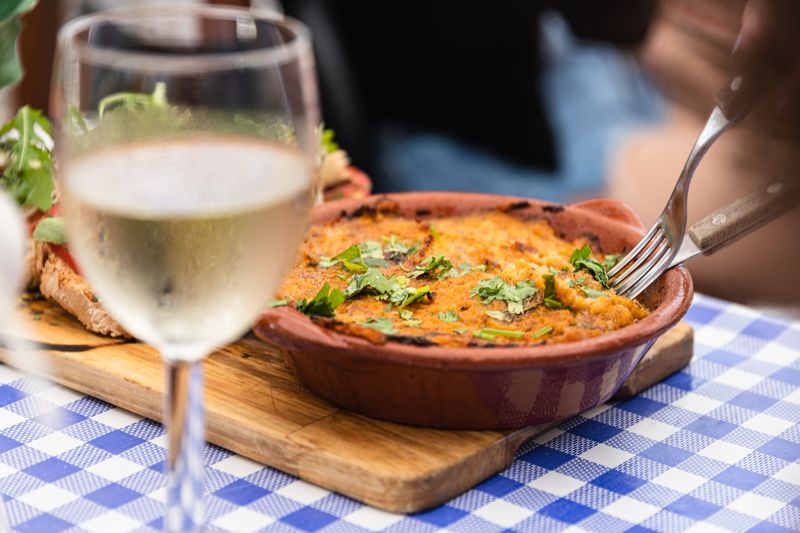
The typical structure is a soup, a main plate, bread, and often a drink and a coffee, priced as one thing. That bundling is what makes it good value, because the individual components ordered separately would cost noticeably more. Portions are sized for people doing physical work at midday, which surprises visitors expecting a light lunch.
Dessert is sometimes included and is more often an extra, and a piece of fruit is a common and unfussy option. The whole thing is designed to be eaten in under an hour, because that is what a lunch break is.
Finding it
It is usually written on a board outside, or on a sheet of paper taped inside the window, rather than printed in the menu. The handwriting is the signal: something written that morning was decided that morning. If a place has a laminated daily dish, it is not a daily dish, and the whole logic above does not apply.
For most people, asking what today's dish is, rather than reading, works everywhere and often gets you a description of how it was made. Restaurants full of people eating the same plate at the same time are advertising the offer more clearly than any board.
Timing
This is overwhelmingly a lunchtime institution, tied to the working day rather than to evening dining. Arriving at the start of the service means the pot is full and you get a choice; arriving late means taking what is left. Selling out is normal and is the direct consequence of cooking a fixed quantity, so it is a sign of the system working.
Evening menus in the same restaurant revert to cooked-to-order dishes at higher prices, which is a different proposition. Planning a day around eating the main meal at midday is closer to how the country actually eats.
What tends to appear
Stews, boiled dinners, roasted meats, rice dishes and fish depending on the day of the week and what the market had. Fish tends to appear on particular days by long convention, and asking which days is a good question for a place you will return to. Dishes involving long cooking dominate, because those are the ones improved rather than harmed by being made in quantity in advance.
On an ordinary week, vegetables are typically boiled and plain, which reflects a cooking tradition rather than a lack of effort. Vegetarian options in this format are limited in traditional places, and this is worth knowing rather than discovering at the table.
Why it is disappearing in some streets
The offer depends on a reliable lunchtime crowd of local workers who come every day at the same hour. Where offices have gone or residents have thinned, that crowd is not there, and the economics of cooking one large pot collapse. Restaurants on visitor routes serve people eating one meal once, which favours a long printed menu over a daily dish.
So the presence of a handwritten daily dish is itself a reliable indicator of a working neighbourhood. Following that indicator will take you to the parts of the city where ordinary life is still happening at midday.
Everything above, in order of what to do first
- Why one dish beats a long menu. A kitchen offering forty dishes must hold ingredients for all of them, which means most of what it serves has been waiting a while.
- What the offer usually contains. The typical structure is a soup, a main plate, bread, and often a drink and a coffee, priced as one thing.
- Finding it. It is usually written on a board outside, or on a sheet of paper taped inside the window, rather than printed in the menu.
- Timing. This is overwhelmingly a lunchtime institution, tied to the working day rather than to evening dining.
- What tends to appear. Stews, boiled dinners, roasted meats, rice dishes and fish depending on the day of the week and what the market had.
- Why it is disappearing in some streets. The offer depends on a reliable lunchtime crowd of local workers who come every day at the same hour.
The takeaway
Handwritten board, one dish, midday. That is the best meal in most neighbourhoods.
Small and repeatable beats ambitious and abandoned, almost every time.
Questions readers ask
Is it always cheaper?
Almost always, because it bundles soup, bread and often a drink into one price and is cooked in quantity rather than to order.
What if it has sold out?
That is normal and expected. Arrive nearer the start of lunch service if you want the choice rather than the remainder.
Also by Inês Carvalho
- How to order coffee in Lisbon without overthinking itCafés & Coffee
- The hills are the transport systemPracticalities
- Sintra in a day, done properlyDay Trips
- What catches visitors outPracticalities