Neighbourhoods
Campo de Ourique, and what a flat grid does to daily life
A regular nineteenth-century expansion on a plateau, where the absence of gradient quietly determines who can live independently and what shops survive.

The options around the plateau quarters are set out side by side below, with the conditions that genuinely favour one over the other.
The difference in one place
- It sits on a plateau, so the whole quarter is walkable without climbing.
- The grid was planned as an expansion rather than grown organically.
- Flatness is why older residents stay independent here for longer.
A plateau, not a hill
The quarter occupies a broad flat top between valleys, so the streets run level in both directions and the usual city gradient simply stops. Getting there involves a climb from almost any direction, which is the deal: one ascent at the edge, then flat ground throughout. Level streets change the shape of the day, because errands can be chained together without the recovery time a hill imposes between each one.
The absence of steps also means prams, shopping trolleys and delivery carts all work here in a way they do not in the old quarters. That single topographic fact does more to define the character of the place than any architectural style applied on top of it.
Built as an expansion
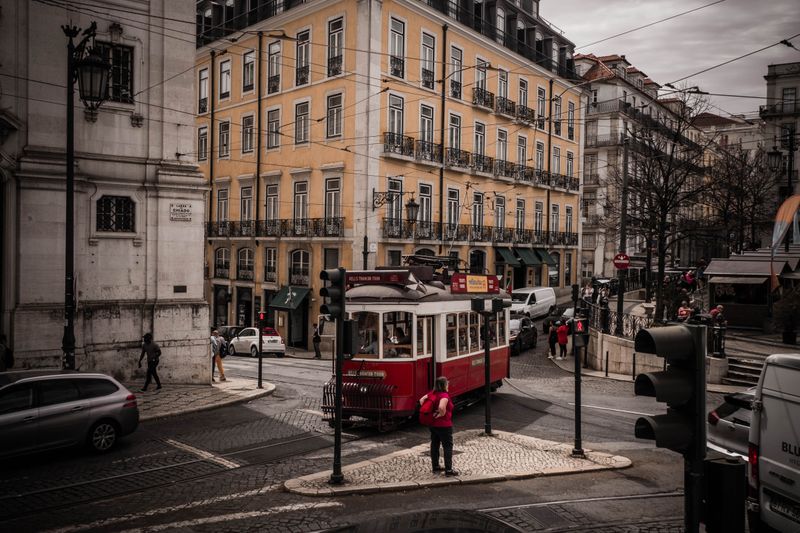
The quarter was laid out when the city outgrew its historic core, so the streets are wider, straighter and more regular than anything older. Blocks are rectangular and consistent, which makes navigation trivial and makes the quarter far less photogenic than the tangled districts downhill.
Buildings are mostly of a similar height and era, giving long uniform street walls and a great deal of consistent afternoon shade. Because it was planned, it received public buildings, a market hall and squares as part of the design rather than as later insertions. Planned quarters of this kind exist in most European cities that expanded in the same period, and they tend to age well for the same reasons.
Flatness changes who can stay
An older resident in a hill quarter can be effectively housebound by a fifty-step lane between their door and a grocer. On a plateau the same person walks to the market, the pharmacy and a café without assistance, which extends independent living by years. That is visible on the street: the daytime population here skews older and is out in it, rather than staying indoors.
On an ordinary week, the same logic applies to families with small children, which is why the quarter has an unusual concentration of both age groups at once. Housing policy discussions rarely mention gradient, but in a city like this it is one of the strongest determinants of who can live where.
The shop mix of a self-sufficient quarter
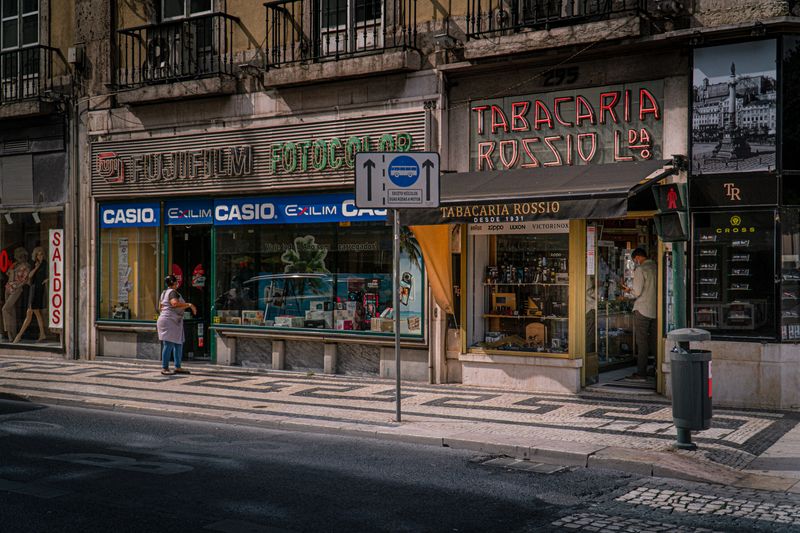
Because residents can reach shops easily, small specialist retail survives here that has disappeared from steeper districts nearby. A fishmonger, a butcher, a haberdasher and a shoe repairer within a few blocks is not nostalgia, it is the visible result of reliable local footfall. The covered market functions as the anchor, drawing people across the quarter and giving the surrounding streets a reason to have shops at all.
In practice, chain retail is present but has not displaced the independents entirely, partly because many premises are held on very long-standing leases.
Watch which shops have queues at midday and you learn more about how a quarter functions than any amount of walking around will tell you.
Residential rather than visited
There is no headline monument, so tour groups have no reason to come, and the quarter has never had to organise itself around visitors. That gives it an ordinariness which is precisely what people who stay a few weeks tend to end up appreciating most.
For most people, cafés here fill with the same faces at the same hours, and becoming recognised takes days rather than the weeks it takes in a transient district. The trade-off is that it feels less dramatic, with fewer views, fewer tiles and none of the sudden reveals the old quarters specialise in. It also means accommodation is scarcer and more residential in character, since fewer buildings have been converted to short lets.
The trade-off, stated plainly
You give up the picturesque and you gain a functioning neighbourhood, and which of those you want depends entirely on how long you are staying. For two nights, staying here would be a mistake, because you would spend the time travelling to whatever you came to see. For a month, it is close to ideal, since daily life is easy and the historic quarters remain a walk or a short ride away.
In practice, the quarter also demonstrates something useful about the rest of the city: where the ground is flat, ordinary shops survive. Applying that test elsewhere will find you several other quarters with the same qualities and none of the reputation.
Side by side
| Consideration | What it means in practice |
|---|---|
| A plateau, not a hill | It sits on a plateau, so the whole quarter is walkable without climbing. |
| Built as an expansion | The grid was planned as an expansion rather than grown organically. |
| Flatness changes who can stay | Flatness is why older residents stay independent here for longer. |
The takeaway
Flat ground keeps a neighbourhood independent. That is the whole story of this one.
The version you keep doing is the version that works.
Questions readers ask
Is it worth visiting for a day?
Not as a sight. It is worth an hour if you want to see a working residential quarter and eat where visitors are not.
Why does it have so many old shops?
Level streets give reliable daily footfall from residents of every age, and long leases have kept premises out of the highest-bidding uses.
Also by Duarte Ferreira
- Viewpoints without the queueNeighbourhoods
- Tiles are cladding, not decorationNeighbourhoods
- The staircase streets and how they organise a hillNeighbourhoods
- Two microclimates: the riverside and the ridgeNeighbourhoods