Neighbourhoods
Why Streets Are Named After Trades And Dates
Lisbon street names record occupations, saints and political dates rather than people or numbers, which makes the map a readable history of who worked where.

American street names tend toward numbers, trees and presidents. Lisbon names streets after trades, saints and calendar dates, and each category tells you something specific about the street.
Trade names record where work happened
Whole districts carry names describing goldsmiths, shoemakers, cod merchants or barrel makers. These were not honorary; the trade physically occupied that street.
Guilds and craft groups clustered for practical reasons, sharing suppliers, materials and customers who knew where to look. Concentration was how a customer found you before advertising existed.
So a run of such names in one area maps a working economy rather than a naming theme. The pattern survives the businesses by centuries.
The rebuilt grid made the naming systematic
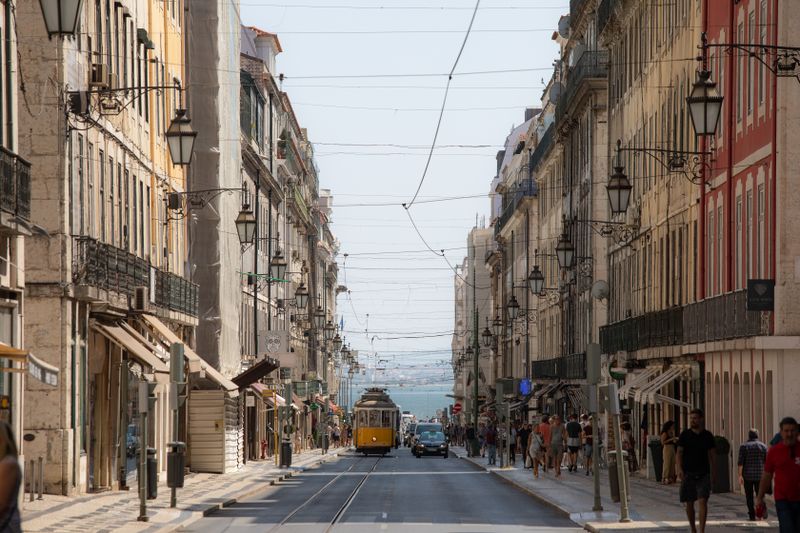
When the lower city was reconstructed after the earthquake, streets were laid out on a plan and assigned to trades deliberately. The naming was administrative rather than organic.
That is why the trade names there sit in a tidy grid while elsewhere they wander. Two different processes produced the same kind of name.
American readers can compare this to a planned downtown where the streets were named in one meeting. The order is visible on the map.
Dates commemorate political turning points
Streets and squares named for a day and month mark revolutions, restorations and republics. The date is expected to be recognized without explanation.
Several such dates recur across the country, appearing in nearly every town. Their ubiquity is itself a record of which events were considered foundational.
Some names were changed more than once as regimes changed, and older residents occasionally still use the earlier name. The map and the conversation can disagree.
Saints and churches anchor the older quarters
Many names refer to a parish church or a religious house that once stood there, sometimes long demolished. The building is gone and the name remains.
Because parishes were the administrative unit for centuries, these names also mark old jurisdictional boundaries. They are civic as much as religious.
A saint's name in a street therefore often signals the oldest layer of the area. It predates almost everything visible.
Reading a name before you walk the street
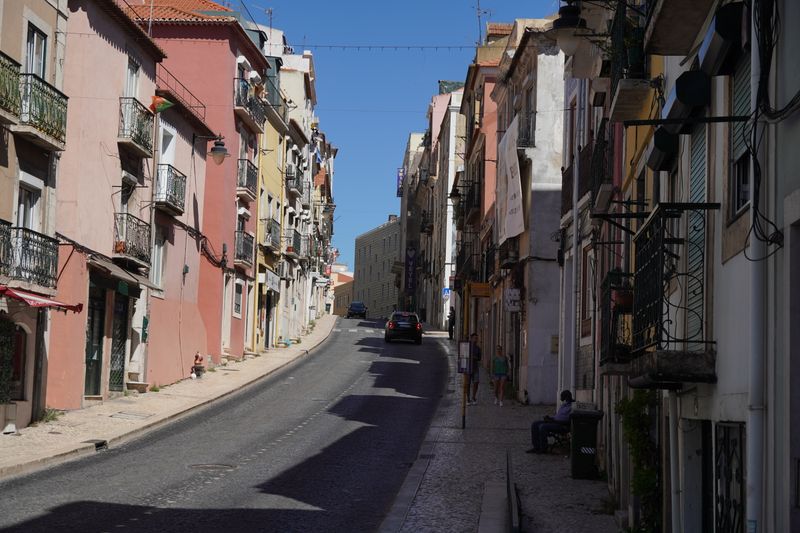
The word beginning an address tells you the shape of the street, distinguishing a road, a lane, a stairway, a viewpoint or a hillside. That is practical information about gradient.
A name containing the word for stairs is a literal warning, and one containing a word for a viewpoint promises a climb. The vocabulary is topographic.
Learning six of those words changes how a map reads. It stops being a network of lines and becomes a description of terrain.
Questions readers ask
Which neighbourhood should I stay in?
For a first short visit, somewhere central and flat is easiest. For a longer stay, one stop out is usually quieter, cheaper and more interesting.
Is the old town safe at night?
Generally yes, with ordinary caution. Pickpocketing in crowds is the realistic risk rather than anything more serious.
Also by Helena Sá
- Roast level is a decision about acidity, not about strengthCafés & Coffee
- Why the same beans taste different in two cafesCafés & Coffee
- Portuguese espresso is not a smaller Italian oneCafés & Coffee
- Grind is the dial that moves everything elseCafés & Coffee