Neighbourhoods
Chiado Was Rebuilt Twice And It Shows
A central shopping district damaged by the earthquake and again by a major fire late last century carries two reconstructions in its façades, and the seams are visible.

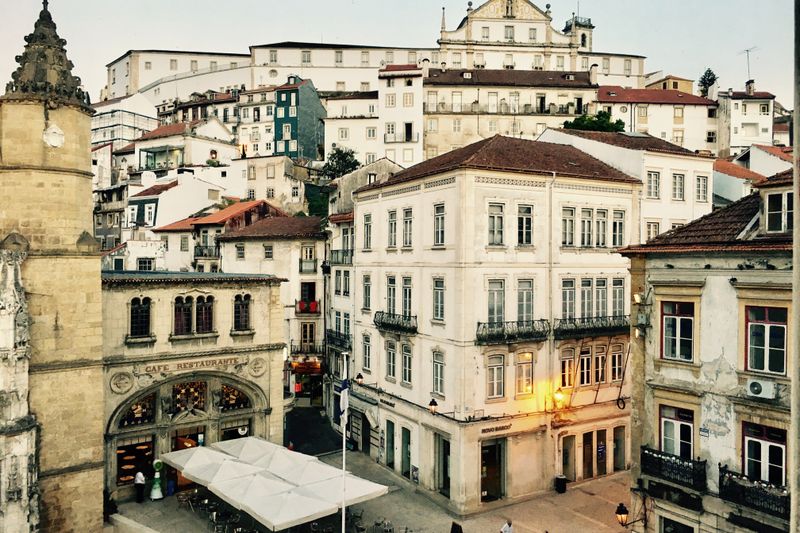
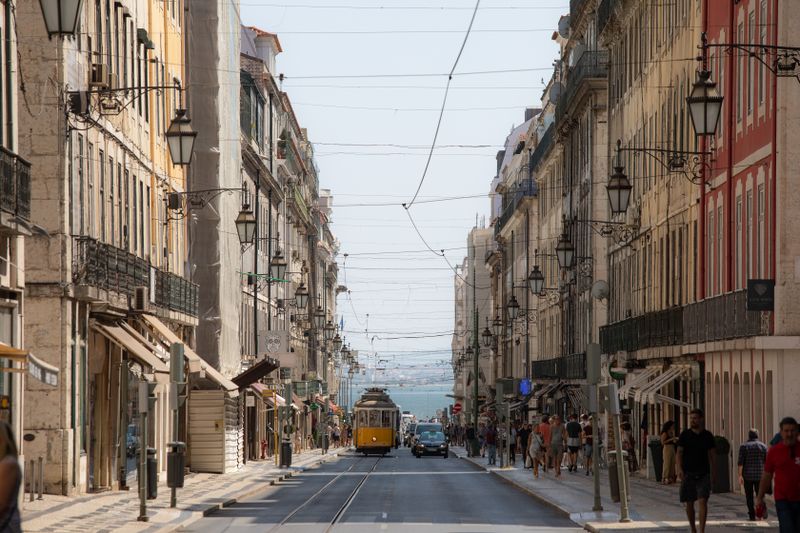
The central shopping district on the slope between the lower town and the upper streets has been rebuilt twice. Both reconstructions are legible in the buildings if you look at the elevations.
The first rebuilding was part of a whole-district plan
After the earthquake the area was reconstructed alongside the lower town, to a scheme with regulated heights, standardised façades and a rational street layout.
That produced the uniform frontages, consistent window rhythms and the sense of a single design intelligence that the district still shows in places.
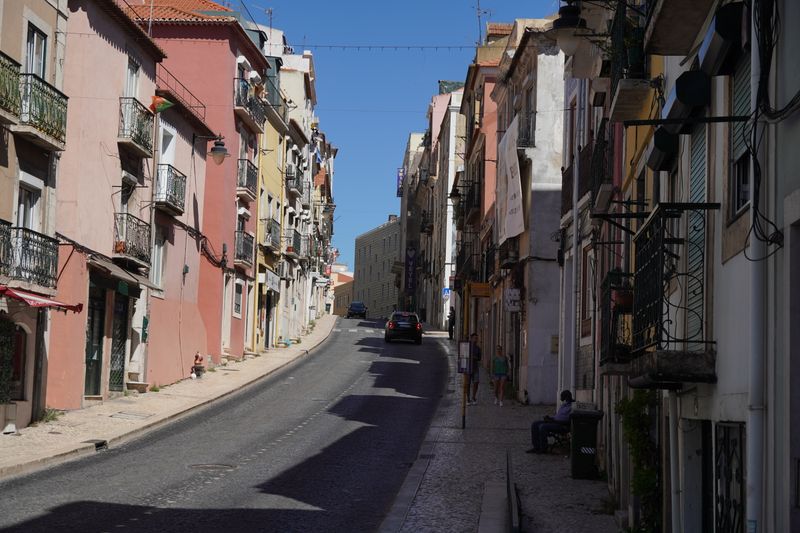
Because it sits on a slope, the plan had to negotiate a steep transition, which is why stairs, ramps and level changes are built into the street pattern.
Then it became the commercial centre
Through the nineteenth and twentieth centuries the district became the city's principal shopping and social area, with department stores, bookshops, theatres and cafés.
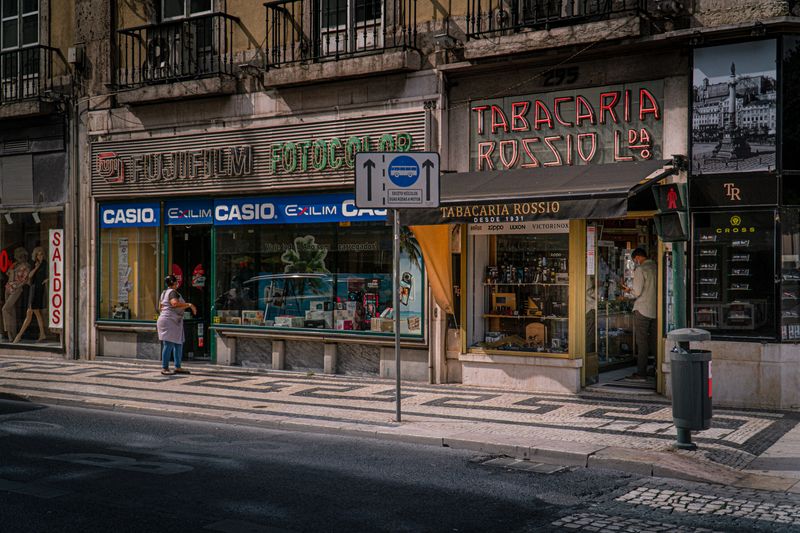
That concentration of retail brought further alteration: shopfronts inserted into older buildings, upper floors converted, and interiors combined across party walls.
Such changes are usually invisible from the street until you notice that a single shopfront runs beneath two clearly different upper elevations.
The fire removed a block, not a building
A major fire late last century destroyed a substantial group of buildings in the heart of the district, including large stores, in a single event.
Fire spreads through a dense block of connected older buildings in a way it cannot through separated modern ones, which is why the loss was contiguous.
The affected area was therefore a hole in the middle of an intact district rather than scattered damage across it.
The second rebuilding kept the outside
The reconstruction retained or reinstated the historic façades while rebuilding the interiors to modern standards, a deliberate decision about continuity of the street.
That approach preserves the experience of walking the street but creates buildings that are new behind an old front, which some regard as honest and others as scenery.
Looking upward is how you spot it. The rebuilt sections have subtly different stonework, newer glazing and a regularity that the surviving buildings lack.
What the two rebuildings left behind
The district now carries three periods at once: post-earthquake planning, commercial nineteenth-century alteration, and late-century reconstruction, all on the same slope.
That layering is why it can feel simultaneously historic and slightly new, and why judgements about its authenticity differ so sharply.
The most useful way to read it is chronologically, tracing which parts stood through what, rather than as a single period piece.
Questions readers ask
Which neighbourhood should I stay in?
For a first short visit, somewhere central and flat is easiest. For a longer stay, one stop out is usually quieter, cheaper and more interesting.
Is the old town safe at night?
Generally yes, with ordinary caution. Pickpocketing in crowds is the realistic risk rather than anything more serious.
Also by Helena Sá
- Roast level is a decision about acidity, not about strengthCafés & Coffee
- Why the same beans taste different in two cafesCafés & Coffee
- Portuguese espresso is not a smaller Italian oneCafés & Coffee
- Grind is the dial that moves everything elseCafés & Coffee