Neighbourhoods
Alvalade And The Idea Of A Planned Neighbourhood
A mid-century district built to a single plan shows what happens when housing, schools, shops and green space are designed together rather than accumulated over centuries.

Parts of the city north of the old centre were laid out in the middle of the last century as complete neighbourhoods, planned in one go. They function differently as a result.
The plan started from the cell, not the street
The design unit was a residential block containing housing, a school, shops and open space, sized so that daily needs sat within a short walk.
Streets then connected the cells rather than defining them, which is the reverse of how an organically grown district works.
That produces long uninterrupted interiors within blocks, where children's play areas and green space sit away from traffic by design.
Housing was deliberately mixed by cost
The plan set out different building types at different rents within the same district, rather than sorting households into separate areas by income.
Apartment buildings of several sizes and standards sit within a few streets of each other, sharing the same schools, shops and transport.
Whether the mixing worked as intended is arguable, but the physical evidence of the intention is still visible in the variety within a small area.
Shops were planned rather than left to appear
Commercial space was allocated in the design, usually at ground level along particular streets, with the type and quantity fixed rather than emerging from demand.
That gives the district an unusually even distribution of everyday shops, and it is why local retail there survived longer than in some older areas.
It also fixed a ceiling. Where demand later exceeded the planned provision, there was nowhere obvious for the extra commerce to go.
The architecture is a specific moment
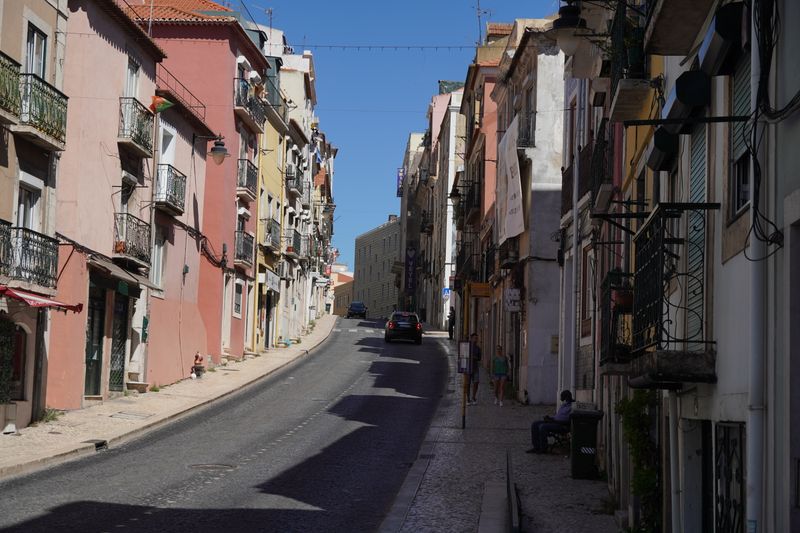
The buildings share a period vocabulary: restrained modernist forms with traditional detailing, tile panels, balconies and a consistent height across whole streets.
That consistency is what makes the district legible. You can tell where the plan stops simply by watching the building line change.
Several of these areas are now valued architecturally, which affects what can be altered and slows the replacement of original fabric.
How it lives now
It remains strongly residential, with a settled population, a real weekday rhythm and very little visitor traffic, which keeps prices and pace different from the centre.
The planned green space matured into substantial tree cover, and that is now among the district's clearest advantages over the denser old city.
For anyone trying to understand how the city expanded, walking one of these districts is more informative than any number of old streets.
Questions readers ask
Which neighbourhood should I stay in?
For a first short visit, somewhere central and flat is easiest. For a longer stay, one stop out is usually quieter, cheaper and more interesting.
Is the old town safe at night?
Generally yes, with ordinary caution. Pickpocketing in crowds is the realistic risk rather than anything more serious.
Also by Helena Sá
- Roast level is a decision about acidity, not about strengthCafés & Coffee
- Why the same beans taste different in two cafesCafés & Coffee
- Portuguese espresso is not a smaller Italian oneCafés & Coffee
- Grind is the dial that moves everything elseCafés & Coffee