Eating
The convent sweets, and why they are mostly egg yolk
An entire family of desserts built from yolks, sugar and almonds, with names that sound religious because they are. The reason is a surplus nobody wanted to waste.
There is a short answer about convent sweets and a useful one, and they are not the same. What follows is the useful one.
The short version
- Yolk, sugar and sometimes almond do almost all the work.
- The usual explanation involves convents using egg whites for other purposes.
- The style is rich and small, and portions reflect that.
A narrow set of ingredients
A remarkable number of traditional sweets here are built from egg yolks, sugar syrup and occasionally ground almonds, with very little else. There is often no flour, no butter and no leavening, which makes the texture dense, glossy and quite unlike a cake tradition. The technique is essentially controlled cooking of yolks in sugar, which is technically demanding and unforgiving of inattention.
Because the ingredients are so few, quality depends almost entirely on the eggs and on the skill of the person at the pan. That narrowness is the signature of the whole family, and once you notice it you see it everywhere on a pastry counter.
The usual explanation
The commonly told account is that convents used large quantities of egg whites for other purposes and were left with yolks to use. Starching religious habits and clarifying wine are the two uses most often cited, and both plausibly consumed whites in bulk. Sugar was available through trade routes, and convents had both the ingredients and the labour to make elaborate sweets.
Historians treat parts of this story with caution, since it is repeated far more often than it is documented, so hold it loosely. What is not in doubt is that many of these sweets carry convent names and were made and sold by religious houses.
What the names tell you
Names referencing heaven, angels, bellies, and specific religious houses are common across the whole category. Many are tied to a particular town or monastery, and the local version is genuinely different from the version elsewhere.
That regional specificity means a sweet that is ordinary in one town is a speciality worth seeking in another. Recipes were closely held and in several cases passed to lay bakers when religious houses were dissolved. This is why a small town bakery can be the only place making a particular sweet properly, with no branch anywhere else.
Why they are so small
The richness of a yolk-and-sugar sweet is extreme, and a portion the size of a mouthful is genuinely sufficient. Serving them small also made an expensive ingredient go further, which mattered when sugar was costly.
For most people, they are traditionally eaten with a strong black coffee, which cuts the sweetness and is a deliberate pairing rather than a habit. Attempting to eat several at once is the most common visitor mistake and produces a very short-lived enthusiasm.
A box of assorted small sweets shared among several people is how they are actually consumed here.
Where they sit now
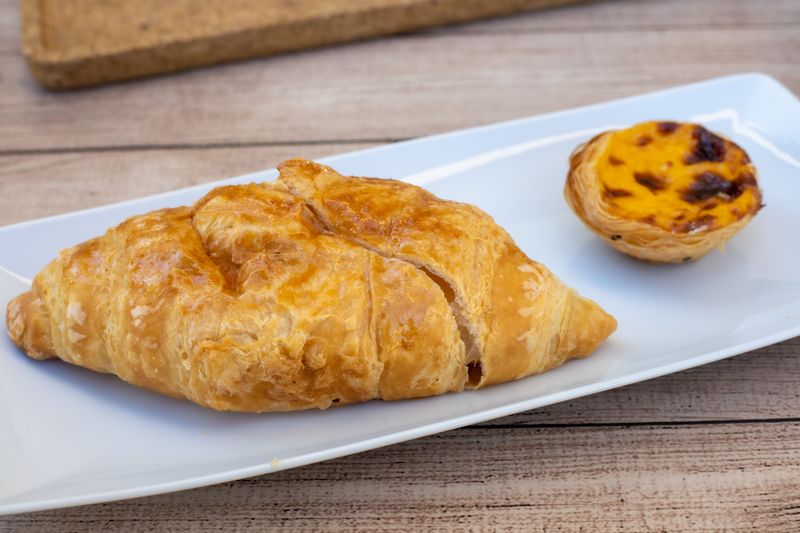
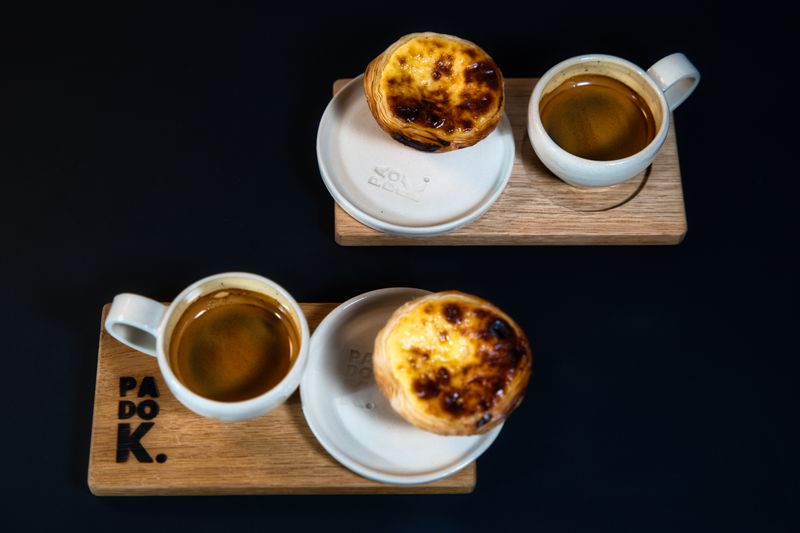
The famous custard tart belongs to this family in spirit, though it adds pastry and is eaten very differently. Most convent sweets never became internationally known, and they remain a domestic and regional pleasure.
The useful part is this: some are made industrially and sold in supermarkets, and the gap between those and a good bakery version is very wide. Festivals and religious calendars still drive when certain sweets appear, so availability is genuinely seasonal in places. Ordering one you have never heard of, in the town it comes from, is one of the more reliable pleasures available here.
If that does not fit your week, it is not a failure of willpower.
Making sense of a counter
If a sweet is deep yellow, glossy, small and sitting in a paper case, it is almost certainly in this family. Anything pale, dry and cake-like is from a different tradition and will taste completely unlike its neighbour on the tray.
The useful part is this: asking which of them the shop actually makes rather than buys is a fair question and gets an honest answer more often than not. Freshness matters less than for pastry, since sugar preserves, but the best versions are still made in small batches. One sweet, one coffee, standing at the counter is the correct dose and the correct setting.
The takeaway
Yolk, sugar, almond, tiny portions, black coffee alongside. That is the whole family.
Small and repeatable beats ambitious and abandoned, almost every time.
Questions readers ask
Why are they so sweet?
They are essentially egg yolk cooked in sugar syrup, with no flour or butter to dilute it. The richness is the style, not an excess.
Is the convent origin story true?
Partly. Convents certainly made and sold them, but the specific explanation about egg whites is repeated more often than it is documented.