Eating
The Half Portion, And When To Ask For One
Portuguese restaurants routinely serve half portions at a reduced price, an arrangement that solves the mismatch between American portion expectations and plates built for sharing.

Portions in a traditional Portuguese restaurant are larger than most visitors expect, and the menu quietly contains a solution. Asking for a half portion is ordinary and widely available.
Full portions were sized for two people
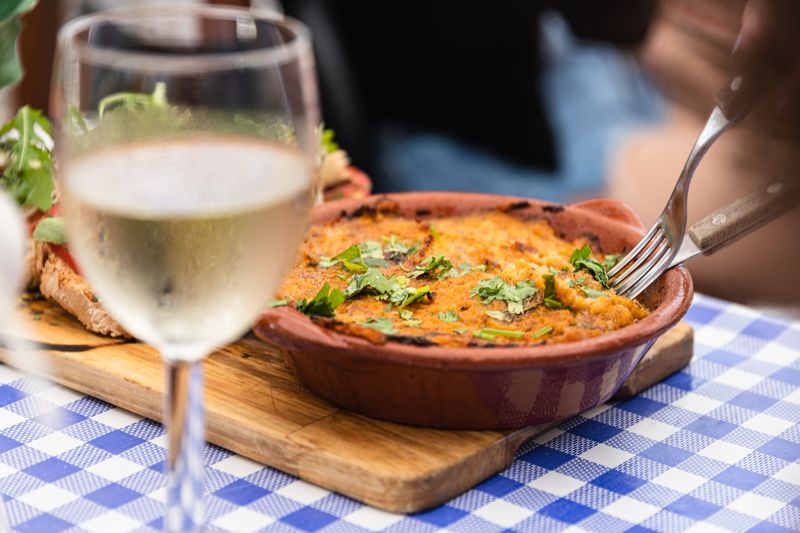
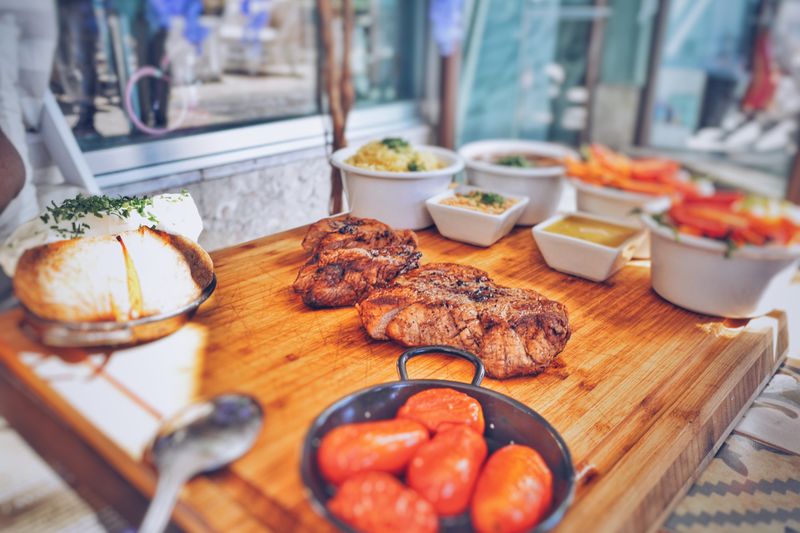
Many dishes are plated to be shared, particularly grilled meats, stews and rice dishes served in a pot. One full portion between two diners is a normal order.
This is different from American oversizing, which assumes one person and an eventual takeout container. Here the size assumes a second fork.
The menu often reflects this with two prices, one for a full portion and one for a half. The half is not a children's serving.
The pricing is not simply halved
A half portion typically costs somewhat more than half the full price, because plating, service and fixed costs do not scale down. The discount is real but partial.
Two half portions therefore cost slightly more than one full portion shared, which is the trade for eating two different things. You are paying for variety.
For a single diner the half portion is straightforwardly cheaper than the alternative of ordering full and leaving food. It exists to solve exactly that problem.
Not every dish can be halved
Dishes cooked to order in a single vessel, or built around one whole item such as a fish, often cannot be divided. The kitchen will say so.
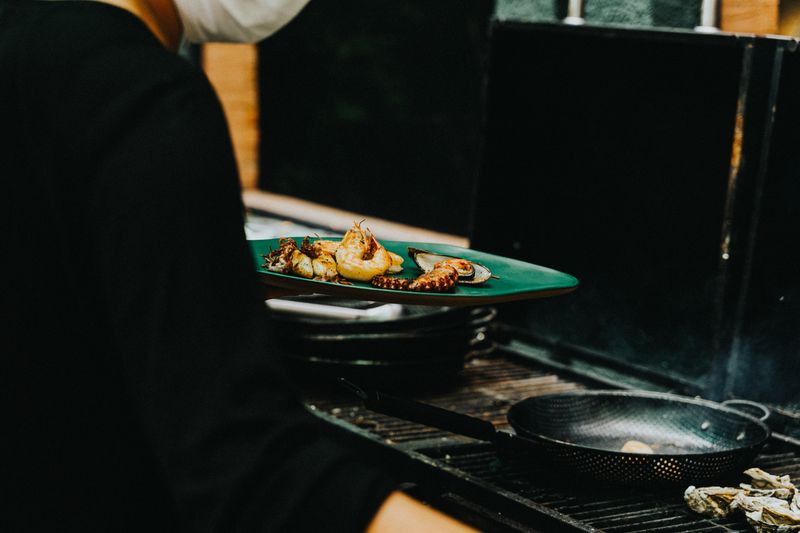
Rice dishes and stews are the easiest to serve in half, since they come from a larger preparation. Grills are usually possible; whole roasted items are usually not.
Asking is normal and refusal is not a rebuke. It is a fact about how that particular dish is made.
Taking food home is uncommon
The American habit of boxing leftovers is not deeply established here, though it is increasingly accommodated. Requesting it will not offend, but it may surprise.
The cultural expectation is to order what you will eat rather than to manage a surplus afterward. The half portion is the mechanism for doing that.
Fish sold by weight complicates the picture further, since the portion is decided before cooking. There the conversation happens at the counter rather than at the table.
How to use it across a meal
A common structure is soup, a half portion of a main and something small to finish. That produces a full lunch without excess.
Two diners can order one full portion plus a half of something else, which spreads the meal without doubling it. The kitchen expects this arrangement.
The general principle is that ordering less is unremarkable here, and nobody reads it as fussiness. The half portion exists because everyone uses it.
Questions readers ask
Why does the bread go hard so fast?
It has almost no fat, sugar or preservative, so the starch retrogrades quickly. The trade-off is a much better loaf on the day it was baked.
Is sourdough common?
Long-fermented artisan bread has grown in the city over the last decade and is easy to find, though it sits alongside rather than replacing the traditional daily roll.