Eating
Offal Dishes Survived Because Of Thrift Not Nostalgia
The city's best known offal dishes come from a period when the whole animal had to be used, and they persist because they are cheap, filling and technically demanding to fake.

Several of the city's signature dishes are made from parts of an animal that other cooking traditions discard. They persist for economic reasons that are still visible on a menu.
Whole-animal use was not a choice
When meat was expensive and refrigeration limited, a household or a butcher used everything, and the cheaper parts fed the people with the least money.
Offal spoils fast, which meant it had to be sold and cooked quickly and locally. That kept it cheap and made it an urban food rather than a rural one.
Dishes built from it therefore concentrate in cities and port towns, close to where animals were slaughtered and the trimmings had to move immediately.
These cuts need technique rather than money
Tripe, liver, blood and similar ingredients demand thorough cleaning, long cooking or precise brief cooking, and a cook who is careless produces something genuinely unpleasant.
That is why these dishes remain a marker of a serious kitchen. The ingredient costs little, so what you are paying for is the handling.
It is also why they are hard to industrialise. The preparation resists shortcuts in a way a grilled cut does not.
The long-cooked dishes are stews in structure
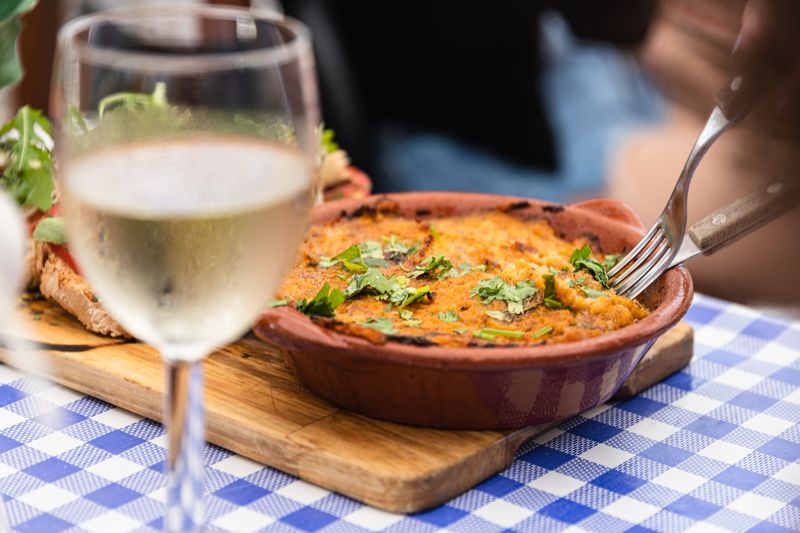
The classic preparations combine the offal with beans, sausage and vegetables in a long braise, which stretches a small amount of meat across many portions.
Beans matter as much as the meat. They provide the bulk, absorb the fat and turn an intensely flavoured ingredient into a balanced plate.
Served with rice or bread, the result feeds a table cheaply, which is the entire point of the form and why it survived industrialisation.
The quick preparations work the opposite way
Liver and similar cuts are also cooked fast and served in a sandwich or with fried potatoes, often as a bar snack rather than a meal.
Here the requirement is not to overcook, since a minute too long makes the texture grainy and dry. The margin is narrow.
These versions are the easiest introduction for someone unsure, because the portions are small and the seasoning is direct.
Why they are still on menus
Partly habit, partly price, and partly because they are the dishes local regulars order, which keeps them commercially viable even where visitors avoid them.
Several are tied to a specific day of the week in particular rooms, a rhythm that survives from when supply arrived on a fixed schedule.
Asking which day a room cooks its offal dish is a reliable way to find out whether the kitchen still keeps that older calendar.
Questions readers ask
Why does the bread go hard so fast?
It has almost no fat, sugar or preservative, so the starch retrogrades quickly. The trade-off is a much better loaf on the day it was baked.
Is sourdough common?
Long-fermented artisan bread has grown in the city over the last decade and is easy to find, though it sits alongside rather than replacing the traditional daily roll.