Day Trips
The Last Train Home Decides The Whole Day
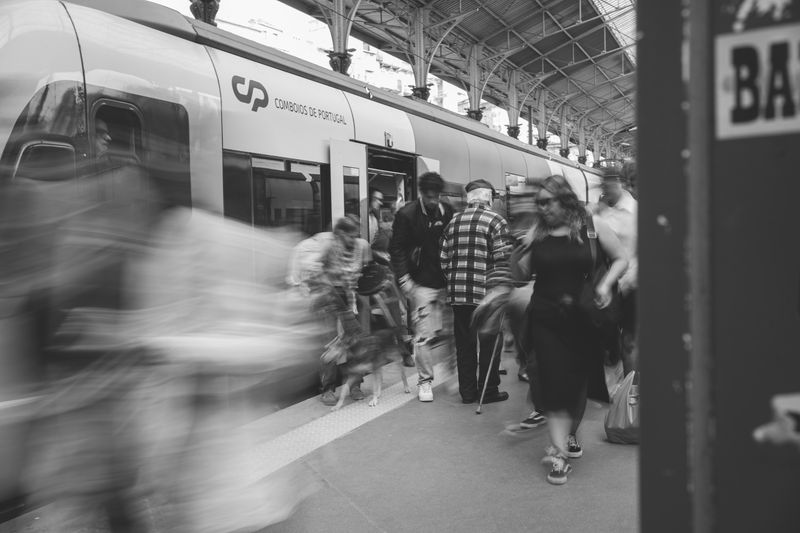
Regional services thin out sharply in the evening and vary by day of the week, so the return journey is the constraint that should be planned before anything else.

The most common way a day trip out of Lisbon goes wrong is the return. Regional timetables thin faster than people expect, and the last departure shapes everything before it.
Frequency collapses rather than tapers
A line with several trains an hour in the middle of the day can drop to one every hour or two in the evening, and then stop.
The drop is not gradual. There is usually a point in the evening where the service changes character, and missing a train after that costs a long wait.
Planning around the last service alone is therefore insufficient. The one before it is the real margin, because the last one leaves no recovery.
Weekends and holidays run a different timetable
Regional services are built around commuting, so weekend and public holiday timetables are thinner and sometimes structured completely differently.
The same trip that is easy on a Wednesday can involve a long connection on a Sunday, and the difference is rarely obvious until you check.
Public holidays are the worst case, because they often run a Sunday service while every attraction is busy with people who also travelled out.
Connections multiply the risk
Any trip involving a change compounds the problem, because a missed connection on a thin evening timetable can mean the rest of the chain is gone.
Where a bus links the station to the actual destination, that bus is usually the weakest link and often stops earlier than the train.
Checking the last bus back to the station is the step people skip, and it is the one that most often strands them.
The consequence for how the day is built
Work backwards. Fix the return train, subtract the local transfer, and what remains is the real time available at the destination.
That usually produces a shorter day than intended, which is a good thing. Trips fail more often from being over-filled than from being too modest.
It also argues for arriving early rather than staying late, since morning services are frequent and the destination is emptier.
What to do if it goes wrong anyway
Larger towns on main lines usually have some later option, whether a long-distance service that calls there or a coach on a separate network.
Small stations on branch lines have nothing after the last train, and the fallback is a taxi over a distance that will cost more than the whole day did.
Knowing which of the two you are in before setting out is the single most useful piece of preparation for a regional day trip.
Questions readers ask
Is it worth the trip on its own?
Not really. It is a cliff and a lighthouse. Combine it with the coast walk or a nearby town and it becomes a good day.
Why is it so cold there in summer?
Wind acceleration over the headland, cold upwelled water offshore, and no shelter at all. Wind chill does the rest.
Also by Inês Carvalho
- How to order coffee in Lisbon without overthinking itCafés & Coffee
- The hills are the transport systemPracticalities
- Sintra in a day, done properlyDay Trips
- What catches visitors outPracticalities