Day Trips
Day trips by train that are not Sintra
The regional network reaches several towns that are quieter, cheaper and genuinely different.

Everything here earned its place by changing an outcome. Nothing about regional day trips is included to round the number up.
What matters most
- Regional trains are inexpensive and reach several towns within about an hour.
- Ferry crossings open the south bank cheaply.
- Weekday trips avoid most of the crowding.
The network is better than expected
Regional and suburban trains reach a range of towns within roughly an hour, at low cost. Services are frequent enough that a day trip does not require careful planning around a single return. Checking the operator site directly gives clearer information than most third-party planners.
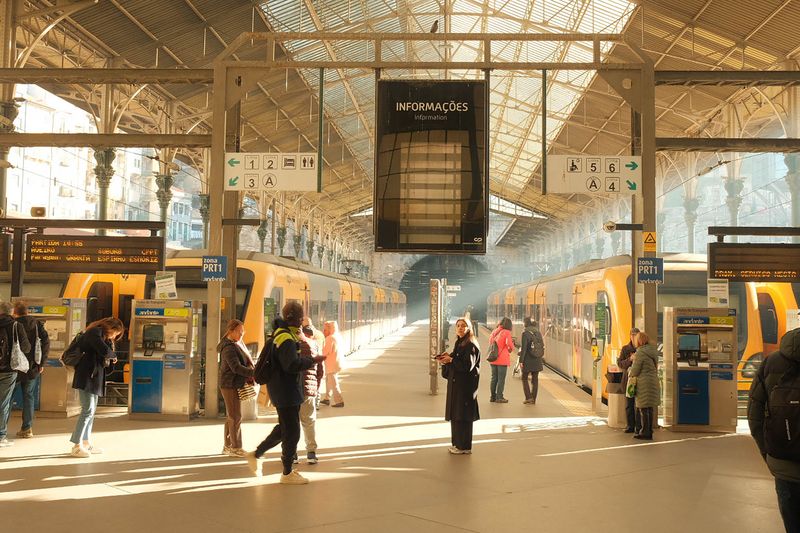
The suburban lines, the regional services and the long-distance trains are three separate products with three separate ticketing systems, and most of the confusion visitors have with the railway here is really confusion about which of the three they are standing on a platform for.
The south bank is close
A short ferry across the river reaches a different set of towns, beaches and food, and the crossing itself is a pleasant journey. It is used daily by commuters and is inexpensive. The views back toward the city from the water are among the best available anywhere.
For most people, some crossings connect straight onto a train on the far side, so the boat is a leg of a longer journey rather than the outing itself, and reading the onward timetable before you sail saves standing on a quay watching one pull out.
Small towns reward a slow day
Several towns along the lines have castles, markets, riverside walks and restaurants that are markedly cheaper than the city. They do not require an itinerary; the point is a long lunch and a walk. Arriving mid-morning and returning in the evening is the natural shape.
Small-town monuments and municipal museums frequently close across the middle of the day and take Monday off entirely, so the shape works best when lunch and a walk are the fixed points and anything with an entrance fee is treated as a bonus.
Wine country is reachable
Wine-producing areas are within day-trip distance, and several are accessible by train plus a short taxi. Tastings generally require booking, and many estates are closed on Sundays. Driving to a tasting is the obvious problem with the obvious answer.
For most people, estates are least able to host during the harvest, when every pair of hands is committed, so late spring and the weeks after the pressing are when a visit gets somebody's attention rather than a hurried lap of the tanks.
Weekdays are quieter
Weekend trains toward the coast and popular towns fill up, particularly in summer. Midweek the same trips are calm and the towns are working rather than hosting. For anyone with flexibility this is the single easiest improvement to a day out.
In practice, the trade is frequency, because some regional lines run a thinner timetable outside commuting hours, and on certain routes the last train back is early enough that staying for dinner commits you to finding a taxi.
What a small station does not have
Beyond the suburban network the stations thin out quickly: no left luggage, often no staffed window, sometimes a single machine and a shelter. Tickets generally have to be bought and validated before boarding, and paying the guard on a service where that is not permitted is treated as travelling without a ticket rather than as an honest mistake.
On an ordinary week, the return platform is sometimes reached by a level crossing rather than a bridge, which is a slower walk than it looks once you can already see the train coming. The habit worth forming is photographing the return timetable on the platform as you arrive, since the printed board is frequently the most current source and there is nobody to ask at six in the evening.
Everything above, in order of what to do first
- The network is better than expected. Regional and suburban trains reach a range of towns within roughly an hour, at low cost.
- The south bank is close. A short ferry across the river reaches a different set of towns, beaches and food, and the crossing itself is a pleasant journey.
- Small towns reward a slow day. Several towns along the lines have castles, markets, riverside walks and restaurants that are markedly cheaper than the city.
- Wine country is reachable. Wine-producing areas are within day-trip distance, and several are accessible by train plus a short taxi.
- Weekdays are quieter. Weekend trains toward the coast and popular towns fill up, particularly in summer.
- What a small station does not have. Beyond the suburban network the stations thin out quickly: no left luggage, often no staffed window, sometimes a single machine and a shelter.
The takeaway
Take a weekday train to a small town and plan nothing beyond lunch.
The version you keep doing is the version that works.
Questions readers ask
Do I need to book regional trains?
Generally not for suburban and regional services — turn up and travel. Longer-distance intercity services do usually require reservation.
Can I use the city transport card?
On suburban lines often yes; further afield you will need a separate ticket. Check the specific line before travelling.
Also by Inês Carvalho
- How to order coffee in Lisbon without overthinking itCafés & Coffee
- The hills are the transport systemPracticalities
- Sintra in a day, done properlyDay Trips
- What catches visitors outPracticalities