Cafés & Coffee
Why Nobody Asks What Size You Want
Portuguese cafes offer no size ladder because the drink is defined by extraction rather than volume, which changes what a customer is choosing between.

An American ordering coffee is used to being asked a size before anything else. In a Lisbon cafe the question does not come, because size is not the variable being offered.
The drink is defined by extraction, not volume
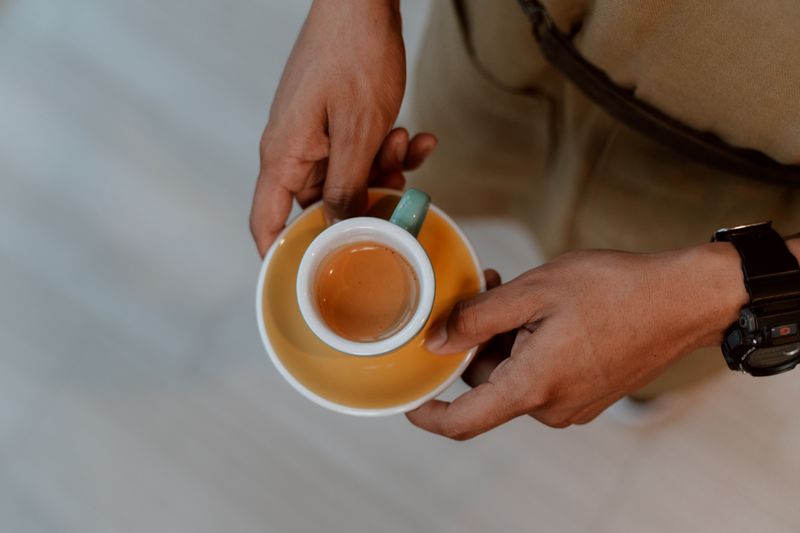
A short coffee is a fixed dose of ground coffee pulled through with a fixed amount of water. Change the water substantially and you have made a different drink rather than a bigger one.
So the decisions on offer concern strength and dilution: a shorter pull, a longer one, one with hot water added. Each has its own name and its own character.
None of those is a size in the American sense. They are recipes, and the cup is whatever that recipe requires.
Where the American size ladder came from
Drip coffee is brewed in bulk and poured, so volume is genuinely free to vary. If the pot holds it, the cup can be any size the shop chooses to sell.
That flexibility became a pricing tool, since a larger cup costs the shop very little more and can be sold for meaningfully more. The ladder exists because the brewing method allows it.
Espresso-based service has no equivalent lever. Doubling the drink means doubling the coffee, which changes the cost and the taste at once.
What happens when you ask for a large one
The request is usually met by adding hot water to a shot, which produces a full cup of thinner coffee. It resembles American drip in volume without resembling it in construction.
Alternatively you may be offered a milk drink, since milk is the normal way volume gets added. A glass of coffee and hot milk is the closest thing to a big morning cup.
Both answers are ordinary and neither is grudging. They simply reveal that volume is achieved by adding something, not by pouring more.
Price follows the coffee, not the cup
Because the dose is fixed, most of these drinks cost close to the same. The gap between the smallest and largest option is narrow by American standards.
Milk drinks cost a little more because milk costs money and takes labor to steam. The difference reflects an ingredient rather than a tier.
This is why the price list on the wall is short. There are fewer things to charge differently for.
Ordering without the size question
The practical move is to decide how much liquid you want and how much milk, then use the name that matches. Two or three words cover almost every combination.
If nothing is specified, the short cup arrives, which catches out visitors expecting a default of eight or twelve ounces. That default is the one genuine surprise.
Once you know the short cup is the baseline, the whole menu reads differently. Everything else is a departure from it.
Questions readers ask
Does robusta give a stronger caffeine hit?
Per gram, yes, roughly double. Whether you notice it depends far more on how much coffee is in the cup and how many cups you have had.
Is there a third species?
Several exist commercially at small scale, including liberica and excelsa, mostly in Southeast Asia. They are rare outside their growing regions.
Also by Helena Sá
- Alfama, Graça and the difference two streets makeNeighbourhoods
- Roast level is a decision about acidity, not about strengthCafés & Coffee
- Why the same beans taste different in two cafesCafés & Coffee
- Portuguese espresso is not a smaller Italian oneCafés & Coffee