Cafés & Coffee
The four ways caffeine gets taken out of a bean
Decaf is a manufacturing process applied before roasting, and the process used explains most of the difference in the cup.

The points below about decaffeination are ordered by how much difference they make, not by how often they get repeated.
What matters most
- Caffeine is removed from green beans, always with water involved somewhere.
- No commercial decaf is completely caffeine free.
- Decaf beans roast differently, which is why they are often over-roasted.
The shared first step
Every method starts by swelling green beans with water so the caffeine can migrate out of the cellular structure. The difficulty is that flavour precursors dissolve just as readily as caffeine does. So every process is really an exercise in removing one compound while returning or protecting the others.
How well a processor manages that is the main determinant of whether a decaf tastes like coffee.
Solvent-based methods
Some processes use a solvent, typically methylene chloride or ethyl acetate, which binds caffeine selectively. The solvent may contact the beans directly or work on the water they have been soaked in.
Residues are strictly limited by regulation in most markets and the solvent is largely driven off by roasting temperatures anyway. Ethyl acetate occurs naturally in fruit, which is why coffee treated with it is sometimes marketed as naturally decaffeinated.
Water-only processing
One family of methods soaks beans in water saturated with coffee solubles, so flavour compounds have nowhere to go and only caffeine leaves. The caffeine is then stripped from that water using activated carbon and the water is reused.
For most people, it uses no added solvent, which is its main selling point and a genuine one for many buyers. It is also slower and more expensive, which shows up in the price on the shelf.
Carbon dioxide under pressure
Pressurised carbon dioxide in a supercritical state behaves as a selective solvent for caffeine while leaving larger flavour molecules behind. It is efficient at industrial scale and generally regarded as gentle on flavour.
Put simply, the plant is expensive, so it tends to be used for large volumes rather than small specialty lots. The extracted caffeine is a saleable product, which is where a good deal of it ends up in soft drinks and tablets.
Why decaf is often roasted dark
Decaffeinated green beans are already partly broken down and darker in colour, and they conduct heat differently. They reach a given colour faster, so a roaster using a normal profile easily takes them too far.
That is a large part of why so much decaf tastes flat and burnt, rather than anything intrinsic to the process. Roasters who build a separate profile for decaf produce noticeably better results.
Adjust the size of it until it is something you would actually do tired.
What to expect ordering it here
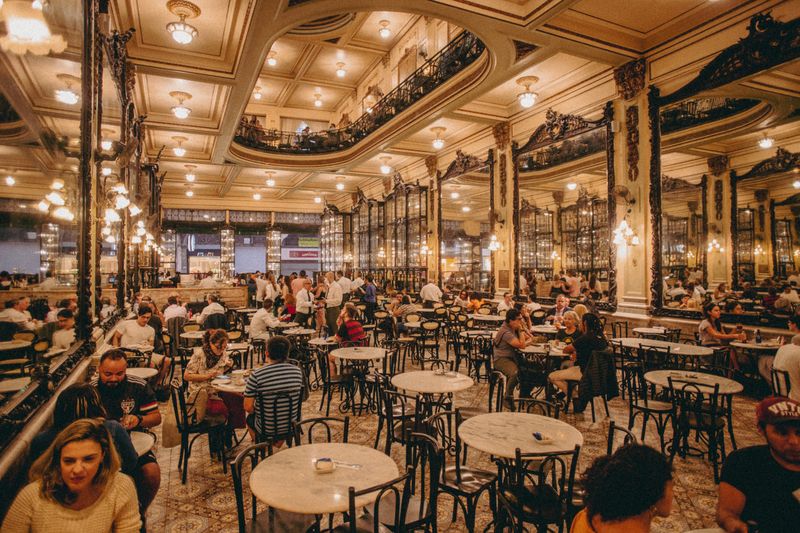
Decaf is widely available in cafés and is a completely unremarkable order. Traditional cafés generally have one option and will not know which process was used.
Where it helps most, specialty bars increasingly treat decaf as a proper coffee and will tell you the origin and the method. Residual caffeine remains in all of it, so it is a large reduction rather than an elimination.
Everything above, in order of what to do first
- The shared first step. Every method starts by swelling green beans with water so the caffeine can migrate out of the cellular structure.
- Solvent-based methods. Some processes use a solvent, typically methylene chloride or ethyl acetate, which binds caffeine selectively.
- Water-only processing. One family of methods soaks beans in water saturated with coffee solubles, so flavour compounds have nowhere to go and only caffeine leaves.
- Carbon dioxide under pressure. Pressurised carbon dioxide in a supercritical state behaves as a selective solvent for caffeine while leaving larger flavour molecules behind.
- Why decaf is often roasted dark. Decaffeinated green beans are already partly broken down and darker in colour, and they conduct heat differently.
- What to expect ordering it here. Decaf is widely available in cafés and is a completely unremarkable order.
The takeaway
Ask which process, and expect the roast profile to matter more than the method.
The version you keep doing is the version that works.
Questions readers ask
Is decaf less healthy?
The processes are regulated and residues are tightly limited, and roasting removes most of what little remains. Any specific health concern is a question for a doctor rather than a café.
Why does decaf cost more?
It is an extra industrial step on the green bean, with yield loss, before roasting even begins. Water-only and carbon dioxide methods add more cost than solvent ones.
Also by Inês Carvalho
- How to order coffee in Lisbon without overthinking itCafés & Coffee
- The hills are the transport systemPracticalities
- Sintra in a day, done properlyDay Trips
- What catches visitors outPracticalities