Cafés & Coffee
What steaming actually does to milk
The texture in a good milk coffee is protein and air held in a fat structure, and there are precise ways to ruin it.
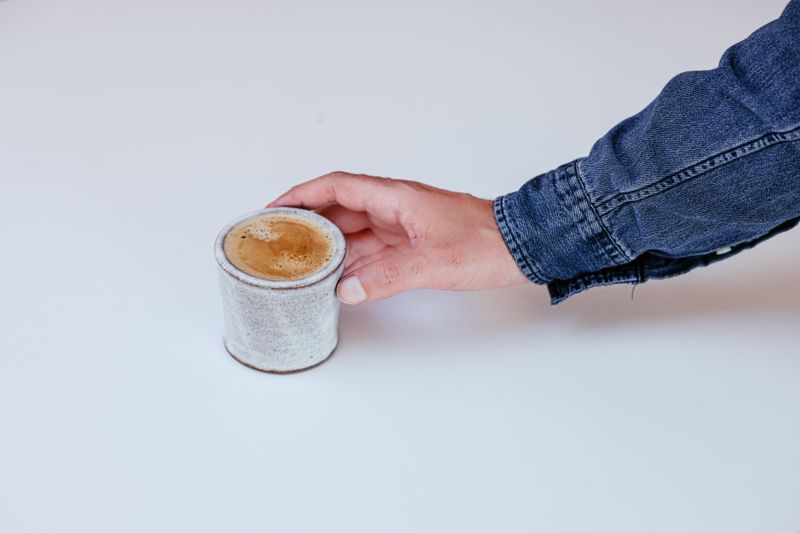
This looks at steaming milk from the practical end — what holds up once conditions stop being ideal.
What holds up in practice
- Foam is stabilised by milk proteins unfolding around air bubbles.
- Overheating destroys sweetness and the foam collapses.
- Plant milks behave differently because their protein and fat differ.
Air first, then heat
A steam wand does two jobs: it injects air near the surface and then spins the milk to break that air into fine bubbles. Whey proteins unfold under heat and agitation and wrap around each bubble, holding it in place. Milk fat helps stabilise the structure and gives the mouthfeel that skimmed milk cannot quite reproduce.
A barista who introduces air after the milk is already hot gets large, dry bubbles that sit on top like washing-up foam.
Sweetness has a ceiling
Milk tastes sweetest somewhere well below boiling, where lactose is most perceptible and the proteins have not yet turned. Push past that and sulphur compounds develop, the flavour turns cooked and papery, and the foam begins to collapse.
In practice, milk that has been scalded cannot be recovered, and re-steaming previously steamed milk gives an audibly worse texture. A drink served painfully hot has usually been taken past this point.
Microfoam versus foam
Well-textured milk should look like wet paint and pour as one substance, not as liquid with a lid of froth. Bubbles you can see individually are a sign that the air was added too fast or too late. Tapping and swirling the jug knocks out large bubbles and folds the foam back into the body.
This is why latte art is a rough indicator of texture rather than a decorative flourish.
The local milk drinks are small
Portuguese milk coffees are generally short, in a small glass or cup, with a much lower milk-to-coffee ratio than a northern European latte. That ratio means the coffee still dominates and the milk is there to soften rather than to bulk out the drink. Asking for a large milky coffee will generally get you something closer to what you expect, in a place used to visitors.
In a neighbourhood café it may simply not exist as an option.
Plant milks are a different material
Soy has enough protein to foam reasonably; oat foams through added stabilisers and fat rather than through protein structure. Almond and rice have little of either and produce a thin, quick-collapsing foam. Barista versions of plant milks add fats, proteins or buffering salts specifically to fix this.
Acidic coffee can curdle some plant milks, which is a pH interaction rather than a sign that anything is spoiled.
Adjust the size of it until it is something you would actually do tired.
Judging a cup
Look for a glossy surface, no visible bubbles, and heat you can drink immediately rather than in ten minutes. Foam that separates into a dry crust within a minute was under-textured. A thin, hot, flavourless milk drink is usually overheated rather than under-caffeinated.
None of this is worth complaining about in a café doing four hundred cups a morning at a low price.
The takeaway
Good milk is glossy, drinkable straight away, and pours as one thing.
The version you keep doing is the version that works.
Questions readers ask
Why does my coffee at home never foam like a cafe?
Domestic steam wands deliver far less dry steam and less pressure, which makes it much harder to inject air and spin the milk at the same time. It is a hardware limit more than a skill one.
Is skimmed milk harder to texture?
It foams easily and holds badly, because there is little fat to stabilise the structure. The foam looks impressive and collapses fast.
Also by Inês Carvalho
- How to order coffee in Lisbon without overthinking itCafés & Coffee
- The hills are the transport systemPracticalities
- Sintra in a day, done properlyDay Trips
- What catches visitors outPracticalities