Cafés & Coffee
Why Coffee Here Rarely Leaves The Building
Lisbon coffee is drunk standing at the counter rather than carried away, and the reason is the size of the serving and the shape of the working day.

Visitors from the United States arrive expecting a paper cup with a lid and find that almost nobody is carrying one. The absence is not a shortage of cups; it is a different idea of what the drink is for.
The serving is too small to walk with
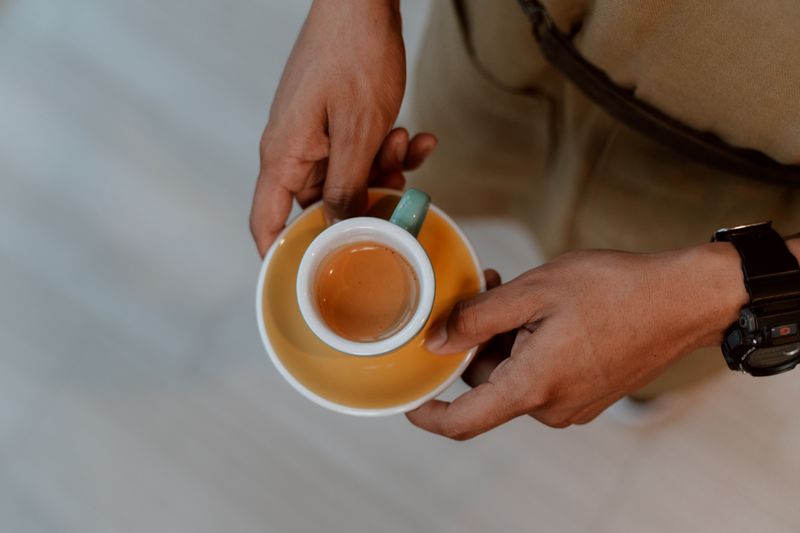
A Portuguese coffee is a short shot in a small cup, and it is gone in three swallows. There is nothing to nurse, so there is no reason to take it anywhere.
An American drip coffee is sized for a commute or a desk, holding fifteen or twenty minutes of sipping. The container follows the quantity, and the quantity follows the habit.
Change the volume and the whole apparatus of lids, sleeves and cup holders stops making sense. A thimble of coffee does not need a travel system built around it.
The pause is the point, not the caffeine
The stop at the counter is a break from whatever came before it, and the drink marks the boundary. Removing the stop and keeping the drink would defeat the purpose.
People come in, order, drink and leave inside a few minutes, and that compression is deliberate. It is a short interruption taken properly rather than a long one taken badly.
Carrying the cup out would stretch that interruption across the rest of the walk. The break stops being a break and becomes background noise instead.
The counter is built for turnover
The bar runs on a rhythm of arriving, serving and clearing, and the machine sits within arm's reach of everyone waiting. Speed comes from proximity rather than from queue management.
Because the cup is returned to the counter almost immediately, the same china cycles through the washer and back into service. The room needs very few cups to serve a great many people.
A takeaway order breaks that loop. It consumes a disposable cup, a lid and a sleeve, and it returns nothing to the counter.
Disposables cost the cafe more than they earn
Coffee is priced low here, and margins on a single cup are thin. Packaging is a real cost against a small ticket rather than a rounding error.
Where an American chain builds the cup into a larger price, a Lisbon counter has no such headroom. Passing the cost on would push the drink out of its customary price band.
So many places offer takeaway reluctantly, or charge a little more for it. The reluctance is arithmetic, not hostility.
What that means for how you order
Asking for coffee to go is understood and generally possible, especially in areas used to visitors. It is simply not the default, and defaults are what a room is organized around.
Standing at the counter for two minutes costs less time than most people expect, because there is no line for a lid and no name called out later. The transaction is finished before a takeaway order would have started.
The habit is worth borrowing for the length of a trip. It changes the day into a series of short stops rather than one long cup carried around.
Questions readers ask
Does robusta give a stronger caffeine hit?
Per gram, yes, roughly double. Whether you notice it depends far more on how much coffee is in the cup and how many cups you have had.
Is there a third species?
Several exist commercially at small scale, including liberica and excelsa, mostly in Southeast Asia. They are rare outside their growing regions.
Also by Helena Sá
- Alfama, Graça and the difference two streets makeNeighbourhoods
- Roast level is a decision about acidity, not about strengthCafés & Coffee
- Why the same beans taste different in two cafesCafés & Coffee
- Portuguese espresso is not a smaller Italian oneCafés & Coffee