Cafés & Coffee
What a cafe actually pays for, and why the cup stays cheap
The coffee itself is a small part of the cost of serving it. Rent, labour and habit set the price, which is why it barely moves from one year to the next.

The points below about cafe economics are ordered by how much difference they make, not by how often they get repeated.
What matters most
- Beans are a minor share of what a served cup costs.
- Rent and labour dominate, and both vary by street.
- A traditional price is partly a social expectation rather than a calculation.
The bean is the small part
The ground coffee in a single cup weighs very little, and even a good quality bean at a fair price contributes a modest share of what you pay. Milk, sugar, water, electricity, cups, cleaning products and breakages add up to another slice that nobody thinks about.
The dominant costs are the ones that exist whether or not anybody orders anything: rent, wages, insurance, licences and equipment finance. That is why doubling the quality of the beans does not double the price of a cup, and why it can be done without anyone noticing on the bill. It also explains why cafés compete on location and speed rather than on ingredient cost, which is a rounding error by comparison.
Rent is the street, not the room
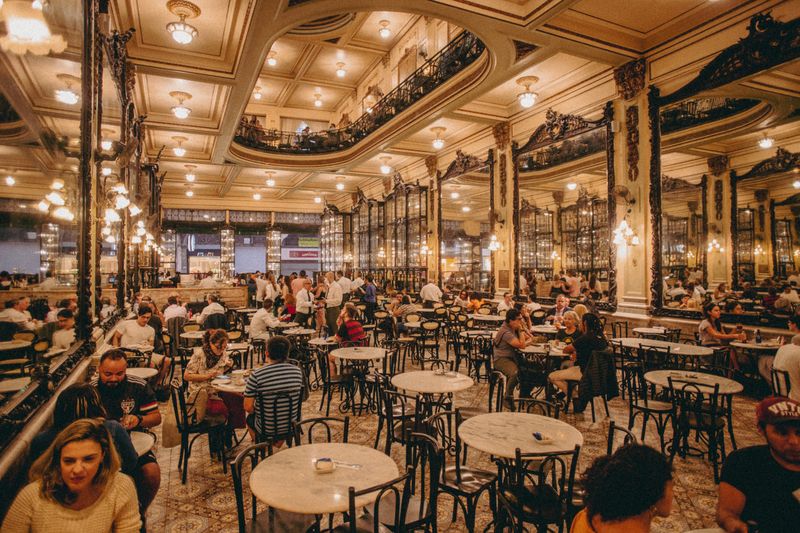
A café pays for footfall, so the same size room costs wildly different amounts depending on which street it opens onto. A premises on a main visitor route must serve far more customers per day than one on a residential lane simply to cover the ground. That pressure is why busy central cafés move people through quickly and why quiet neighbourhood places can let you sit.
Very old leases distort this picture significantly, which is why a handful of central cafés still operate at prices that make no contemporary sense. When such a lease ends, the business usually cannot survive at the new rent, and that is the mechanism behind most closures people mourn.
Labour and the speed of service
A short coffee takes a similar amount of staff time to a large elaborate drink, but earns much less, which is why counters push volume. Table service costs several times more in labour per customer than counter service, which is precisely why the tiered pricing exists.
Terrace service costs more again, because staff cover distance, weather interrupts, and tables occupy licensed public space that is paid for. None of that is a surcharge for tourists; it is a fairly direct reflection of what each service model costs to provide. Knowing this makes the price list read as a menu of service levels rather than as a set of traps.
Why the traditional price barely moves
The price of a standard short coffee in an ordinary café is close to a social convention, and customers react sharply when it changes. That makes owners reluctant to raise it even as costs climb, so they absorb increases or recover them on other items instead.
For most people, pastries, sandwiches, alcohol and lunch plates carry much better margins and quietly subsidise the cheap cup. This is why a café that sells only coffee is a difficult business and why almost none of them do. The cheap cup is therefore not evidence of cheap coffee but of a business model built around everything else on the counter.
Why speciality costs more
Higher grade green coffee costs substantially more per kilo, and lighter roasting produces less forgiving coffee that is wasted more often. Preparation takes longer, dosing is measured, shots are discarded when they run wrong, and all of that is staff time and product cost.
Filter brewing occupies a member of staff for minutes rather than seconds and ties up a seat for longer. Smaller volumes mean less purchasing power, so every input from cups to milk costs the small operator more. The gap in price is therefore real rather than positioning, even though positioning obviously exists on top of it.
If that does not fit your week, it is not a failure of willpower.
What this means for you
Paying the terrace price for a view you actually want is a fair trade, and paying it by accident is the avoidable version. A more expensive cup is not automatically better coffee, but a much cheaper one in an expensive location is telling you where the margin comes from.
Supporting a neighbourhood café by buying the pastry as well as the coffee is more useful than any amount of tipping. If you want a café to survive, using it on ordinary weekdays matters more than using it on the days everyone else does. Understanding the economics also makes the arguments about the city's changing streets a good deal easier to follow.
Everything above, in order of what to do first
- The bean is the small part. The ground coffee in a single cup weighs very little, and even a good quality bean at a fair price contributes a modest share of what you pay.
- Rent is the street, not the room. A café pays for footfall, so the same size room costs wildly different amounts depending on which street it opens onto.
- Labour and the speed of service. A short coffee takes a similar amount of staff time to a large elaborate drink, but earns much less, which is why counters push volume.
- Why the traditional price barely moves. The price of a standard short coffee in an ordinary café is close to a social convention, and customers react sharply when it changes.
- Why speciality costs more. Higher grade green coffee costs substantially more per kilo, and lighter roasting produces less forgiving coffee that is wasted more often.
- What this means for you. Paying the terrace price for a view you actually want is a fair trade, and paying it by accident is the avoidable version.
The takeaway
You are paying for a room and someone's time. The coffee is the cheapest thing in the transaction.
Pick the one that costs you least, and let the rest wait.
Questions readers ask
Why is coffee so cheap here?
The standard cup is close to a social convention, and cafes make their margin on pastry, lunch and drinks rather than on it.
Is the terrace price a tourist surcharge?
No. Table and terrace service cost more in labour and licensing, and the tiers are usually displayed on the price list.
Also by Helena Sá
- Alfama, Graça and the difference two streets makeNeighbourhoods
- Roast level is a decision about acidity, not about strengthCafés & Coffee
- Why the same beans taste different in two cafesCafés & Coffee
- Portuguese espresso is not a smaller Italian oneCafés & Coffee