Cafés & Coffee
Which rooms are built for sitting an hour
Some cafes are designed to move you through and some are designed to hold you. The furniture, the light and the counter depth tell you which before you order.

What follows is the working version of cafe rooms: the decisions in the order you actually meet them, with the reasoning attached.
Before you start
- Seat type is the clearest signal of intended dwell time.
- A deep counter with standing room is built for turnover.
- Natural light and hard surfaces determine how long a room stays comfortable.
Furniture is a message
A stool with no back and a small round table is not an oversight; it is an instruction about how long the room expects you to remain. Upholstered benches, armchairs and tables with room for a plate and a book are the opposite instruction, and they cost the owner more per customer. A room that has invested in comfortable seating needs a higher spend per visit to justify it, which usually shows in the prices.
That is the underlying economics of every café: floor area is finite, and the seating decides how many people can pass through it in a day. Neither model is better; they are answers to different questions, and choosing the wrong one for your afternoon is the actual mistake.
The counter tells you the model
A long deep counter with standing space in front of it is the traditional configuration, built for a fast drink taken upright. Where the counter is short and most of the room is tables, the business is expecting seated service and longer visits.
Look also at whether there is a till at the counter or table service with a bill at the end, because that dictates the rhythm entirely. Places that take payment on the way out are structurally happier for you to stay, since nothing has been closed off. A café where cups are cleared the moment you finish is telling you something, gently, about the next customer.
Light and how long you last
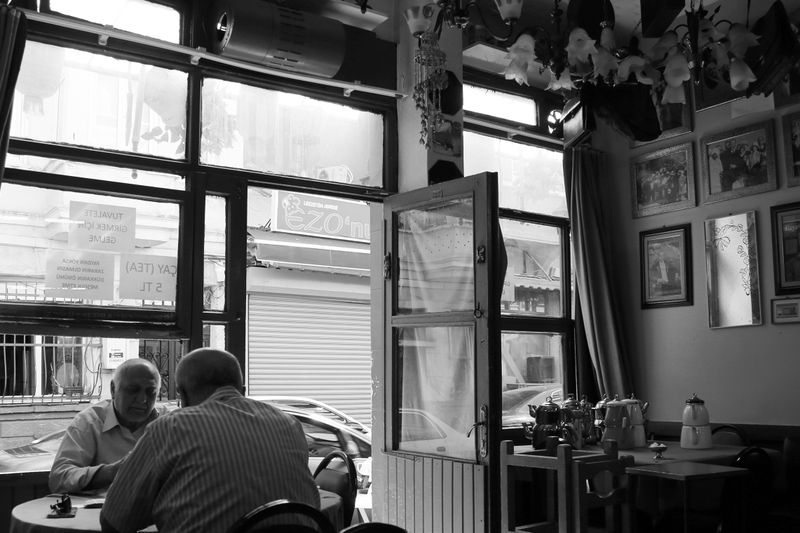
A room with daylight from one side stays comfortable for hours, because your eyes are not fighting either glare or gloom. South-facing glass in summer here is a liability rather than an asset, and the good long-sitting rooms often face away from the sun. Deep rooms with a single street window get dark quickly, which is fine for a short cup and tiring for a long stay.
On an ordinary week, artificial light matters after dark: harsh overhead lighting shortens visits noticeably, which some owners understand very well. If a room feels subtly uncomfortable and you cannot say why, light is the first thing to examine.
Sound and hard surfaces
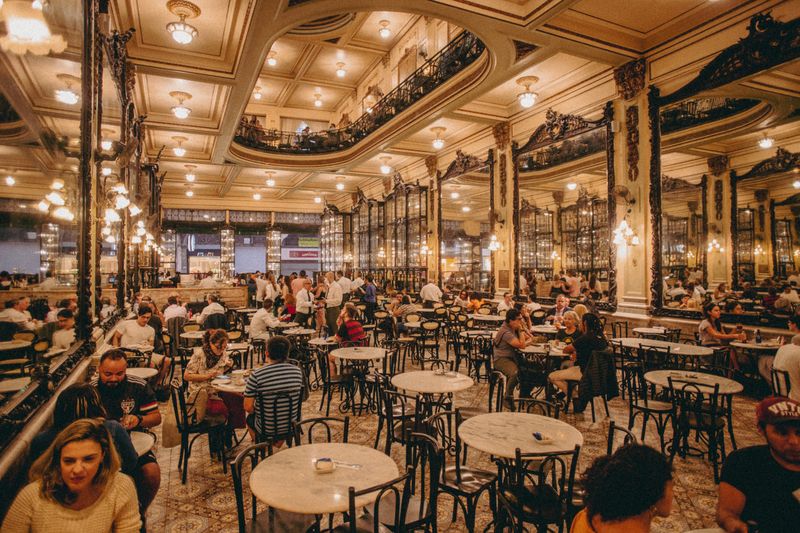
Traditional cafés here are full of marble, tile, glass and stone, which reflect sound and make a busy room genuinely loud. That is fine for a five-minute coffee and exhausting for a two-hour conversation, and it is a physical property rather than an atmosphere. Rooms with fabric, wood, plants and irregular surfaces absorb sound and support longer sitting, which is why newer cafés feel calmer.
A tiled room with a busy machine can be loud enough that you raise your voice without noticing, which is tiring in a way people misattribute to the coffee.
Checking the ceiling and the floor before you settle takes two seconds and predicts the next hour accurately.
Tables that work and tables that do not
A small round marble table is beautiful and is genuinely bad for anything involving paper, a laptop or two plates. Table height relative to seat height varies enormously in old cafés, and a low table with a high chair becomes uncomfortable within half an hour. Window counters facing the street are excellent for solo sitting and poor for conversation, since you cannot see the person beside you.
Corner tables with a wall behind you are the most durable choice for a long stay, for reasons of both sound and psychology. The best long-sitting seat in most rooms is not the most attractive one, and is usually still free.
None of this is a substitute for talking to a clinician if something feels wrong.
Matching the room to the hour
For a short cup between errands, the standing counter is faster, cheaper and more pleasant than any table. For reading, choose daylight, a back on the chair, and a surface large enough that nothing has to sit on your lap. For a conversation of any length, prioritise soft surfaces over view, because sound will decide how the hour goes.
For most people, for a meal alongside coffee, look for tables that already have cutlery, since that tells you the kitchen expects to be used. Getting this right costs nothing and does more for an afternoon than choosing between two similar cups ever will.
The takeaway
Read the chairs before you read the menu. They tell you what the room is for.
The version you keep doing is the version that works.
Questions readers ask
How can I tell if I can sit for a long time?
Seat backs, softer surfaces and payment on the way out all suggest yes. Backless stools and a deep standing counter suggest a short visit.
Why are traditional cafes so loud?
Marble, tile and glass reflect sound rather than absorbing it. It is a property of the materials, not of the crowd.
Also by Helena Sá
- Alfama, Graça and the difference two streets makeNeighbourhoods
- Roast level is a decision about acidity, not about strengthCafés & Coffee
- Why the same beans taste different in two cafesCafés & Coffee
- Portuguese espresso is not a smaller Italian oneCafés & Coffee