Cafés & Coffee
How to tell a serious cafe from a merely busy one
Queues measure location, not quality. There are half a dozen visible habits that separate a place that cares about the cup from one that simply has a good door.

This looks at judging a cafe from the practical end — what holds up once conditions stop being ideal.
What holds up in practice
- A queue usually reflects position on a route rather than skill.
- Grinder care and purging are visible signs of attention.
- Milk handling and pastry turnover give away the rest.
A queue measures the street
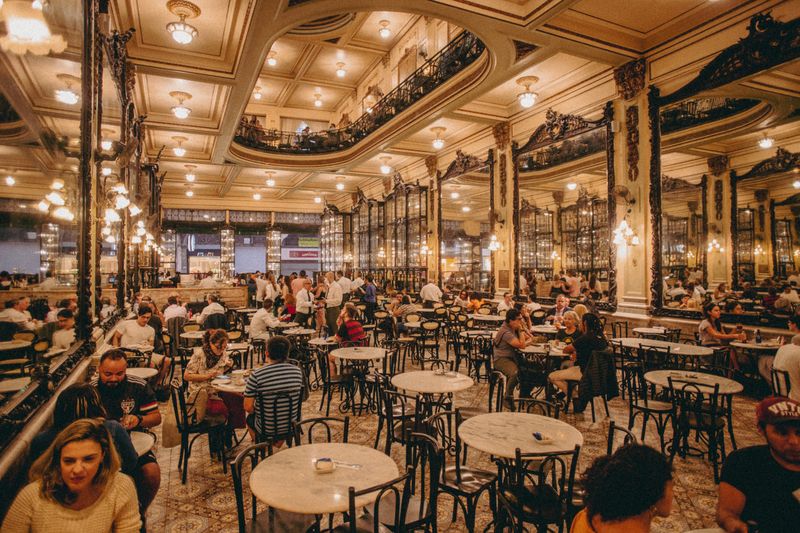
A café on a heavily walked corner will be full regardless of what it serves, because most people choose by proximity rather than by research. That means a queue is decent evidence of location and very weak evidence about the cup you are about to be handed. The inverse also holds: an empty café on a quiet lane may be superb and simply invisible to anyone not living nearby.
A more useful signal is whether the same people are in there at the same time on consecutive days, which is hard to fake. Regulars are the strongest single indicator available to an outsider, and they cost nothing to notice.
Watch the grinder
A grinder that is adjusted during service, rather than set once in the morning and ignored, indicates somebody is tasting what comes out. Grinding to order rather than dispensing from a hopper of pre-ground coffee is the single largest difference in freshness available at a counter. A visible layer of stale grounds around the machine is normal in a busy place, but caked oily residue is not.
In practice, if the same dose is being tipped in without weighing anywhere, that is traditional practice rather than an error, and it is why cups vary. None of this is snobbery; grind consistency does more to the cup than almost any other variable in the room.
Watch the milk
Milk that is steamed fresh for each drink, in a jug sized to the order, is the clearest sign of a counter paying attention. A jug of milk steamed once and reheated repeatedly through the morning produces the cooked, flat taste that ruins milk drinks. The steam wand should be wiped and purged after every use, which takes a second and is immediately visible.
Large volumes of leftover steamed milk poured away suggests poor sizing, and pouring it back into the fresh milk suggests worse. In traditional cafés, milk is often simply heated rather than textured, which is a legitimate style and a different thing from doing it badly.
Watch the pastry
Pastry quality is dominated by time out of the oven, so what matters is turnover rather than the recipe or the reputation. A counter that bakes or receives in small batches through the morning will always beat one that filled its display at dawn.
Trays that empty and are replaced are the signal; trays that sit full and untouched at midday are the warning. A place with a queue for its coffee and a stale display is telling you exactly where its attention goes.
Warm pastry sold at the moment it is warm is one of the genuine pleasures here and is not correlated with price.
Listen to the room
A counter where staff greet people by name, remember orders and finish sentences is a room with a stable customer base. Speed with courtesy is the local standard, and being served in seconds without a word is normal rather than rude. A café where the staff drink the coffee themselves during a lull is a small but genuinely predictive sign.
If somebody behind the counter tastes a shot and adjusts something, you have found a place that measures itself. These signals are all free, take under a minute to read, and outperform any ranking compiled by people who visited once.
If that does not fit your week, it is not a failure of willpower.
What not to use as a signal
Elaborate latte art is a decoration that correlates weakly with taste and not at all with the quality of a black coffee. A wall of certificates, awards and framed articles tells you about marketing effort rather than about this morning's cup. Origin cards and tasting notes are useful only if the staff can answer a question about them without reading the card.
In practice, price is a weak signal in both directions, since the cheap cup is subsidised and the expensive one may be paying for the address. Judge the habits rather than the presentation, and you will be wrong far less often.
The takeaway
Watch the grinder, the milk jug and the pastry tray. Ignore the queue.
Small and repeatable beats ambitious and abandoned, almost every time.
Questions readers ask
Is a long queue a good sign?
Mostly it tells you the cafe is on a busy route. Regulars returning at the same hour are a much better indicator.
Does latte art mean good coffee?
It shows the milk was textured properly, which matters for milk drinks. It says nothing about the espresso or a black coffee.
Also by Helena Sá
- Alfama, Graça and the difference two streets makeNeighbourhoods
- Roast level is a decision about acidity, not about strengthCafés & Coffee
- Why the same beans taste different in two cafesCafés & Coffee
- Portuguese espresso is not a smaller Italian oneCafés & Coffee