Cafés & Coffee
The working day of a cafe, hour by hour
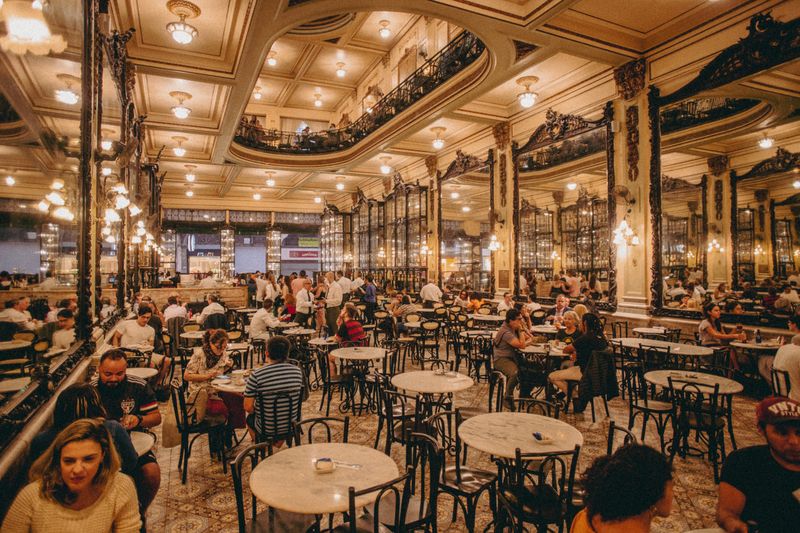
A neighbourhood cafe passes through four or five completely different businesses between opening and closing.
The theory of the rhythm of a cafe day is well covered elsewhere. This is about the version you meet in practice.
What holds up in practice
- The early shift is regulars, coffee and standing, and moves fast.
- Midday turns many cafes into a canteen with a set lunch.
- Late afternoon is the quietest and the best time to sit.
Before work
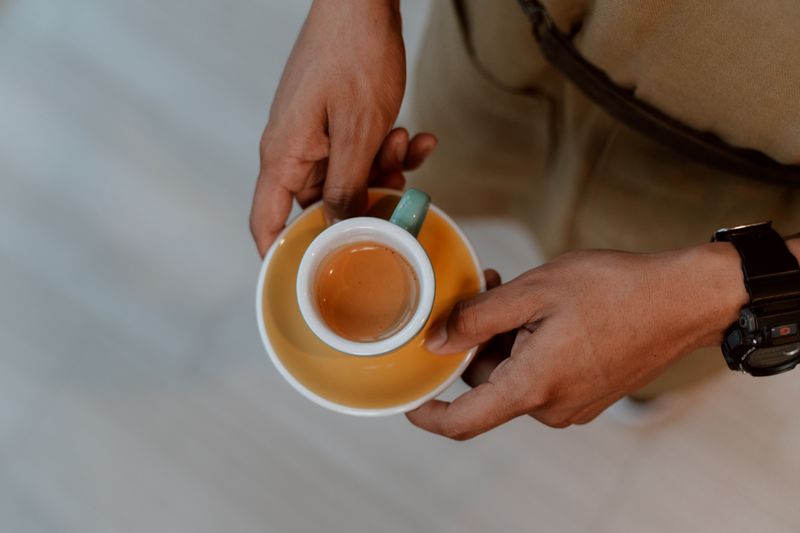
The first hours belong to people on their way somewhere: a coffee, sometimes a pastry, drunk standing in a few minutes. Service is fast and largely wordless because the staff already know what most of the room drinks. This is the cheapest, quickest and most local version of the café and it is over by mid-morning.
It is also the best time to see how a place really operates.
Mid-morning
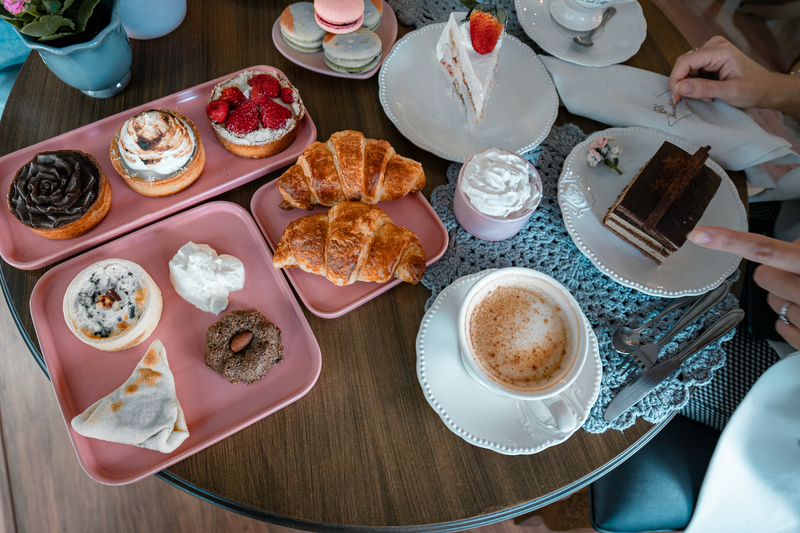
A second wave arrives with more time, and the pastry counter does most of its trade. Tables begin to be used, conversations lengthen, and the pace of the counter drops. Deliveries often land in this window, so the room can be briefly chaotic.
Fresh pastry batches typically come through around now, which is when the counter looks its best.
Lunch
Many cafés serve a set lunch and become, for two hours, a small canteen with a fixed menu written on a board. Prices for that meal are usually well below the evening equivalent and it is aimed at people working nearby.
In practice, arriving at the start of the window rather than the middle is the difference between sitting down and queueing. Coffee service continues throughout but the kitchen dominates the room.
The afternoon lull
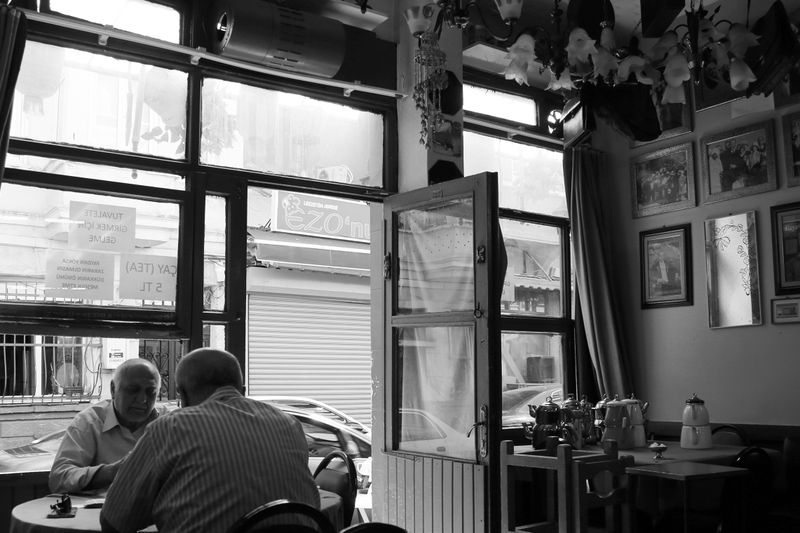
After the lunch service the room empties and becomes the calmest it will be all day. This is the window for reading, writing, a long conversation or an unhurried second coffee. Staff are cleaning down and restocking and will not mind you staying.
If you want a table in a busy café without pressure, this is the hour to take it.
The end of the working day
A third coffee wave arrives late afternoon, often alongside a beer or a small sweet. In many neighbourhood cafés the drinks trade takes over from here and the room shifts register entirely. Some close early evening and hand the street over to bars; others carry straight through.
Which of those happens tells you a lot about whether the street is residential or nocturnal.
Fitting yourself into it
Ordering food outside kitchen hours in a small place usually means the kitchen is closed rather than reluctant. Taking a table for two hours during the lunch rush is the one genuinely inconsiderate move. Every other hour of the day, sitting as long as you like is entirely normal.
Matching your visit to the phase you want is the whole trick.
None of this is a substitute for talking to a clinician if something feels wrong.
The other side of the counter
Most small cafés run on a very short staff, frequently the same two or three people from opening to close, which is why the person who served you at seven in the morning is still there at seven in the evening. The split shift is standard in the trade — an early start, a break across the dead afternoon, then back for the evening — and it shapes when a room feels sharp and when it feels worn out.
For most people, the work invisible from a table is the restocking, the pastry order, the ice and the till reconciliation, most of which has to happen in the quiet hours a lingering customer is occupying. Closing time means the end of the cleaning rather than the end of the serving, which is the difference between getting a last order in and sitting through an awkward twenty minutes of chairs going up.
The takeaway
Every café is five businesses a day. Choose which one you want to walk into.
Small and repeatable beats ambitious and abandoned, almost every time.
Questions readers ask
When is the best time to work from a cafe?
The afternoon lull, comfortably. Early morning and the lunch window are the two periods where a laptop on a table is genuinely in the way.
Do cafes mind if I only order one coffee?
Outside the busy phases, no. If you are staying a long time, a second order at some point is a normal courtesy rather than a rule.
Also by Helena Sá
- Alfama, Graça and the difference two streets makeNeighbourhoods
- Roast level is a decision about acidity, not about strengthCafés & Coffee
- Why the same beans taste different in two cafesCafés & Coffee
- Portuguese espresso is not a smaller Italian oneCafés & Coffee