Cafés & Coffee
The Old Cafes With Marble And Mirrors
The grand nineteenth-century coffee houses survived because their fittings were expensive, their leases were long and their rooms were built for a kind of public life that had nowhere else to go.

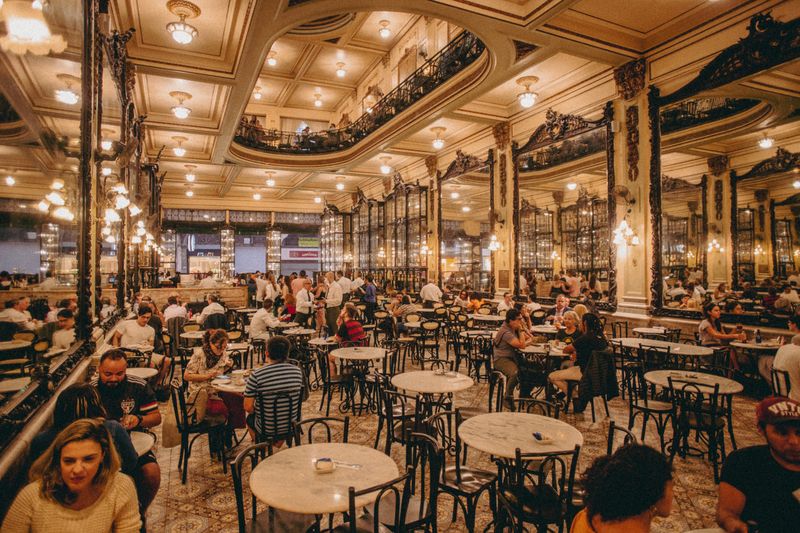
A handful of cafés in the city have carved wood, marble tables, mirrors and ceilings far higher than a coffee business needs. They survive for reasons of property and licensing more than sentiment.
They were built as public rooms, not shops
The grand café belonged to a period when a city's political, literary and commercial conversation happened in rented public rooms. Newspapers, meetings and negotiations all needed somewhere neutral to sit.
That function justified the fittings. A room hosting that kind of use needed to look serious, and the marble and mirrors were an investment in credibility rather than decoration.
The high ceilings were practical too. A crowded, smoky room with no ventilation depends on volume of air, so height was a comfort measure before it was a style.
The fittings became the reason to keep the room
Once a room is fitted out in stone, brass and mirror glass, gutting it is expensive and rebuilding it as something else costs more than continuing. Inertia favours the existing use.
Many of these interiors later gained heritage protection, which fixed the position. The fittings could not legally be stripped, so the room stayed a room of that shape whoever held the lease.
Protection cuts both ways. It preserves the interior but restricts what an operator can change to make the business work, which is why some of these places feel frozen.
The economics are unusual
A large historic room has heating, cleaning and staffing costs far above a small counter café, and it cannot raise turnover by squeezing in more seats.
The answer is usually a higher price for a seated table and a trade that leans on longer visits, meals and visitors rather than on the neighbourhood's morning routine.
Some of them also earn from the room itself — as a filming location, a venue or simply as somewhere people come to look at. The coffee is not carrying the building alone.
They stopped being neighbourhood cafés
The daily local trade largely moved to smaller rooms with lower prices and faster service. A regular buying two coffees a day is price-sensitive in a way an occasional visitor is not.
So the grand cafés drifted towards an occasional-visit clientele, which changed the atmosphere more than the fittings did. A room used weekly feels different from one used every morning.
Where a historic café still holds a genuine regular trade, it is usually because it kept a counter price alongside the table price and never abandoned the standing customer.
What to look at once inside
The counter tells you the most: whether it is still worked hard, whether locals are standing at it, and whether the till is busier than the seated room.
The other detail worth noticing is the back of the room. Grand cafés were often several rooms in sequence, with a quieter one behind for people who intended to stay.
That sequence of rooms is the original design working exactly as intended, and it is the part of these buildings that no modern café layout reproduces.
Questions readers ask
Does robusta give a stronger caffeine hit?
Per gram, yes, roughly double. Whether you notice it depends far more on how much coffee is in the cup and how many cups you have had.
Is there a third species?
Several exist commercially at small scale, including liberica and excelsa, mostly in Southeast Asia. They are rare outside their growing regions.
Also by Helena Sá
- Alfama, Graça and the difference two streets makeNeighbourhoods
- Roast level is a decision about acidity, not about strengthCafés & Coffee
- Why the same beans taste different in two cafesCafés & Coffee
- Portuguese espresso is not a smaller Italian oneCafés & Coffee