Cafés & Coffee
Free Refills Do Not Exist, And Pricing Explains Why
The bottomless cup familiar to American diners cannot survive where coffee is served one shot at a time, because the marginal cost sits in labor rather than in liquid.

The American refill, poured unasked until you cover the cup with your hand, has no Portuguese equivalent. The difference comes from how each cup is made rather than from generosity.
Drip coffee is cheap at the margin
A batch of filter coffee is brewed once and sits on a warmer, so a second cup costs the diner a few cents of coffee and a few seconds of pouring. The pot is already made.
That near-zero marginal cost is what makes the bottomless cup possible. The customer is being given something that was going to be produced anyway.
The refill then works as an inducement to stay, order food and tip. It is a loss leader inside a larger check.
Every espresso is made from scratch
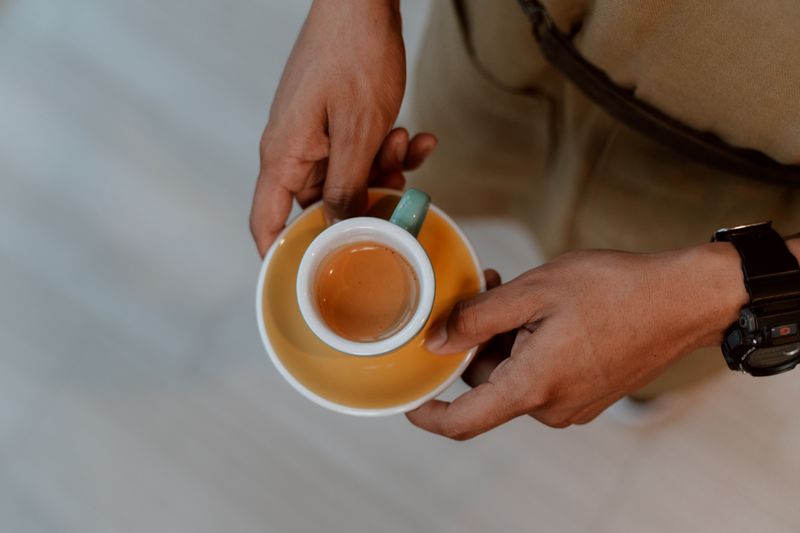
A short Portuguese coffee is ground, dosed, tamped and pulled for that customer, then the basket is knocked out and cleaned. Nothing is held in reserve.
The cost is mostly the barista's attention, and that attention cannot be batched. A second cup takes as long as the first.
Giving it away would mean giving away labor during the busiest minutes of the day. That is a different proposition from topping up a pot.
The price band makes the math tighter
Coffee here is expected to cost very little, and cafes compete on being reliably cheap. There is no inflated first cup to subsidize a free second one.
American refill pricing works because the initial cup carries a wide margin. Remove that margin and the model collapses immediately.
So the honest arrangement is a low price per cup, paid each time. What you lose in refills you gain on the first one.
Ordering a second cup is completely normal
Nobody thinks less of a customer who orders another, and long conversations often run on two or three coffees. The second is simply rung up.
Because each is inexpensive, a morning of several cups still costs less than one large American coffee in many cases. The total tends to surprise visitors in the right direction.
The rhythm also differs: cups are ordered as needed rather than accumulating in one vessel. You drink, you pause, you decide.
What replaces the bottomless cup
The functional equivalent of lingering over refills is a milk drink, which is large enough to last. Volume comes from milk, and milk is paid for once.
Water is the other half of the answer, and a glass of it often arrives alongside the coffee without being requested. That part is free.
Understanding the swap prevents the most common misreading, which is that the cafe is being stingy. It is charging for what it actually spends.
Questions readers ask
Does robusta give a stronger caffeine hit?
Per gram, yes, roughly double. Whether you notice it depends far more on how much coffee is in the cup and how many cups you have had.
Is there a third species?
Several exist commercially at small scale, including liberica and excelsa, mostly in Southeast Asia. They are rare outside their growing regions.
Also by Helena Sá
- Alfama, Graça and the difference two streets makeNeighbourhoods
- Roast level is a decision about acidity, not about strengthCafés & Coffee
- Why the same beans taste different in two cafesCafés & Coffee
- Portuguese espresso is not a smaller Italian oneCafés & Coffee