Living There
Laundry Without A Dryer, And Why It Shapes The Week
Most Lisbon flats have a washing machine and no dryer, which turns laundry into a weather-dependent task that quietly organizes the domestic week.

A Lisbon apartment usually comes with a washing machine tucked into a kitchen or a bathroom, and almost never with a dryer. Clothes are dried on a rack or a line, and that changes the schedule.
The machines are small and slow
European washing machines hold considerably less than American ones and run cycles measured in hours rather than half hours. They use less water and heat it internally.
That combination means a week's laundry is several loads spread across days, not one Saturday morning. The machine sets the pace.
Running a load late at night is common, though noise rules in shared buildings make that a matter of some care. Old floors carry vibration well.
Drying depends on the weather
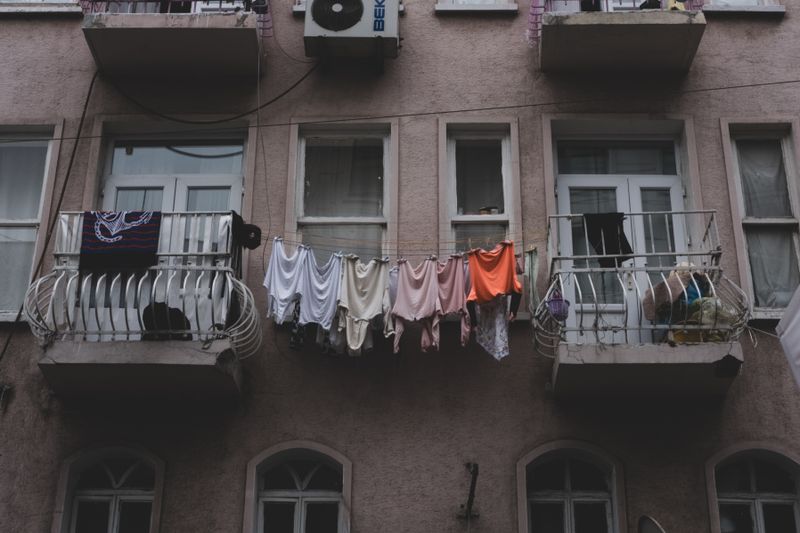
Without a dryer, washing has to go somewhere it will dry, which in practice means a balcony, a window rack or an interior stand. Sun and wind do the work.
Summer dries a load in a few hours and winter can take two days indoors. The same task has very different durations across the year.
So laundry gets planned around the forecast, which is an unfamiliar habit for anyone from a house with a vented dryer. It becomes a small weekly calculation.
Winter humidity turns it into a problem
Drying clothes indoors releases a substantial amount of water into a flat that may already struggle with damp. Cold walls then collect condensation.
The standard responses are ventilation, a dehumidifier and drying in the room that heats most easily. All three are common in older buildings.
Ignoring it produces mold on walls and behind furniture, which is the most frequent complaint in winter rentals. The laundry is often the source.
What the absence of a dryer does to clothes
Line-dried fabric lasts longer, since tumble drying is what wears cotton down. Clothes here survive more washes.
They also come out stiffer, and heavy items such as towels and jeans take noticeably longer. Many households simply accept the texture.
Ironing is more common than in American homes partly for this reason. It compensates for what the dryer would have done.
The alternatives, and their limits
Laundromats exist, more in areas with students and short-term residents, and some offer a wash-and-fold service. They are useful for bulk items rather than for routine loads.
Condenser and heat-pump dryers can be installed, but they are expensive to run and many older flats lack the electrical headroom. Circuit capacity is a real constraint in old buildings.
Most residents adapt instead, and after a month the rhythm stops registering as an inconvenience. It becomes simply how the week is arranged.
Questions readers ask
Should I avoid visiting in August?
It is hot, crowded and partially closed. It is also alive in a particular way and has the longest evenings. If you have a choice, September and May are easier.
How do I know if a place will be closed?
Notices go up on the door a week or two ahead. Asking directly in July is the only reliable method for a small business.
Also by Inês Carvalho
- How to order coffee in Lisbon without overthinking itCafés & Coffee
- The hills are the transport systemPracticalities
- Sintra in a day, done properlyDay Trips
- What catches visitors outPracticalities