Living There
Winter indoors: damp, cold and the standard responses
The most common complaint from people who move here is about being cold in a warm country, and the reasons are structural.

Everything below about winter indoors comes from what actually happens rather than from what is supposed to.
What holds up in practice
- Much of the housing stock has no insulation and no central heating.
- Condensation and mould in winter are common in older flats.
- Ventilation and dehumidification usually help more than heating alone.
Built for the summer
Traditional construction here was designed to stay cool, with thick masonry, tiled floors and high ceilings. Those same features make a flat slow to warm and quick to lose heat once the outside temperature drops.
Central heating was historically uncommon and remains absent from a large share of the stock. The result is interiors that sit close to the outdoor temperature for months.
Where the damp comes from
Cooking, showering and breathing put a substantial amount of water into the air of a flat every day. When that warm moist air meets a cold uninsulated wall, it condenses on the surface. Persistent surface condensation is what grows the black mould that appears on window reveals and behind furniture.
It is a physics problem before it is a cleanliness problem.
Ventilation is counterintuitive but works
Opening windows wide for a short period once or twice a day exchanges the humid indoor air for drier outdoor air. Short sharp ventilation loses less heat than leaving a window ajar all day, because the structure stays warm. Extractor fans over the hob and in the bathroom do more than any amount of wiping down.
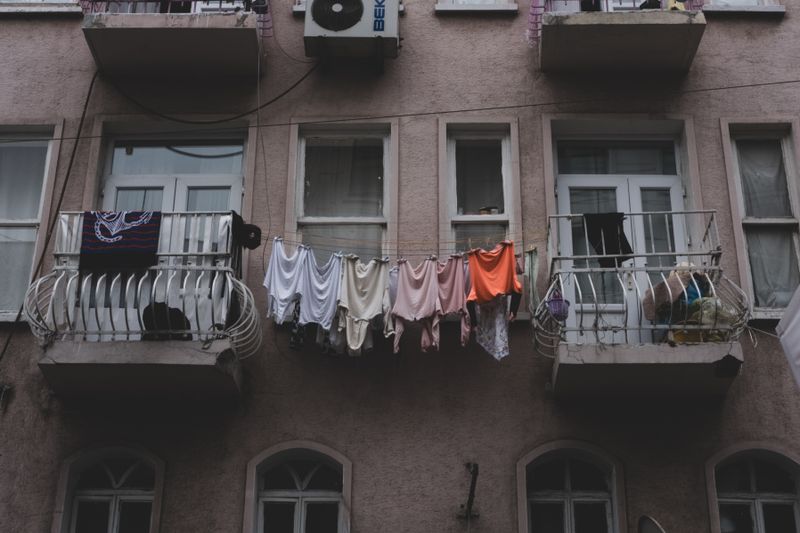
Put simply, drying laundry indoors without ventilation is the single largest avoidable moisture source.
Dehumidifiers and heaters
A dehumidifier removes the water directly and is the standard local purchase, often more effective than adding heat. Portable electric heaters warm a person and a small room rather than a flat, which is the realistic goal. Running electric heating hard is expensive, and energy prices vary, so check current tariffs rather than assuming.
Heating one room well and closing the doors is what most people actually do.
What to look for when renting
Ask about heating, glazing and which way the flat faces before signing anything. A north-facing flat in an old building will be noticeably colder and damper than a south-facing one in the same street.
Put simply, look for existing mould marks around windows and in corners, which indicate a recurring problem rather than a one-off. Top floors under uninsulated roofs are the coldest in winter and the hottest in August.
Renovated stock is different
Recently renovated flats increasingly have double glazing, insulation and reversible air conditioning that also heats. That equipment changes the winter experience completely and is worth prioritising over square metres. It also costs more, which is the trade-off most people end up making.
Health effects of persistent damp housing are real, and anyone with respiratory symptoms should raise them with a doctor.
The cheap fixes, in the order that helps
Draughts around old window frames and under doors lose more heat than the glazing does, and adhesive seals plus something across the bottom of a door are the cheapest intervention with the largest immediate return. Heavy curtains drawn at dusk cut the loss through single glazing considerably, and a rug on a tiled floor matters because cold stone pulls heat directly out of you rather than out of the air.
Heating a bedroom hard for an hour before you sleep and then switching it off costs far less than trying to hold an entire flat at a temperature it was never built to reach. Anything involving a gas appliance or an unvented burner needs proper ventilation and a working detector, and the person to settle that is a qualified professional rather than a landlord offering reassurance.
The takeaway
Ventilate hard and briefly, dehumidify, heat one room, and check the aspect before you sign.
The version you keep doing is the version that works.
Questions readers ask
Do I need to buy a heater?
Many people do, in November. A small electric heater and a dehumidifier are the two most common first purchases for a winter here.
Is mould normal?
Common in older uninsulated flats, and not something to accept indefinitely. Ventilation and dehumidification help, and persistent structural damp is a landlord issue.
Also by Inês Carvalho
- How to order coffee in Lisbon without overthinking itCafés & Coffee
- The hills are the transport systemPracticalities
- Sintra in a day, done properlyDay Trips
- What catches visitors outPracticalities