Practicalities
Walking downhill is the part that hurts
Everyone warns about the climbs. The damage is done on the descents, where the muscles work in a way most people never train.

There is a settled way of talking about walking downhill. It is worth asking how much of it survives contact with the detail.
The argument in brief
- Descending loads muscles while they lengthen, which causes more soreness.
- Impact through the knee is higher going down than going up.
- Smooth polished stone is at its most slippery on a slope.
Why down is harder than up
Climbing works muscles as they shorten, which is metabolically demanding and leaves you out of breath but does little structural damage. Descending works the same muscles as they lengthen under load, acting as brakes, and that kind of contraction causes far more microscopic damage.
The consequence is delayed soreness that arrives a day or two later, which is why people blame the wrong day's walking. Your heart rate stays low on a descent, so it feels easy at the time and the cost is invoiced afterwards. This is the same mechanism that makes walking down a mountain the part that ends holidays rather than the ascent.
What the knee is doing
On a descent the leading leg absorbs body weight arriving with downward momentum, and the load through the joint is higher than on level ground. The thigh muscles control that, and when they fatigue the joint takes more of it, which is when discomfort starts. Steeper gradients and longer descents multiply the effect, and a city built on hills provides both in quantity.
Anyone with existing knee problems will notice this here far more than in a flat city, and should plan around it. None of this is a reason to avoid the hills; it is a reason to manage how much continuous descending you do.
Technique that actually helps
Shorter steps keep the leading knee less extended and reduce the peak load on each footfall considerably. Letting the knee bend rather than locking it allows the muscle to absorb the impact instead of the joint.
Zigzagging across a steep street reduces the effective gradient, which is why the old streets themselves often zigzag. Using steps rather than a ramp is easier on the knees when steps are available, because each drop is controlled and predictable. Slowing down on descents is the single most effective change and is the one people are least willing to make.
The surface problem
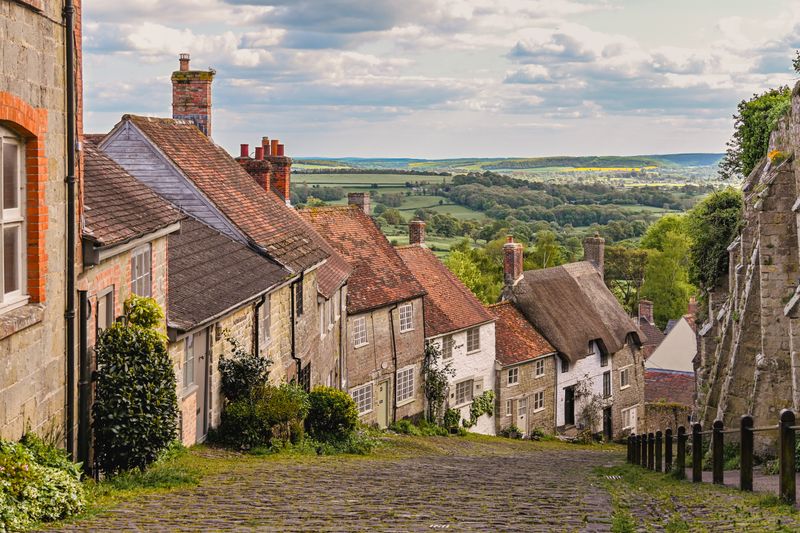
The traditional pavement here is small blocks of polished limestone, and polished stone on a slope is a genuinely slippery surface. It is at its worst when slightly damp, which includes morning dew and light drizzle rather than only heavy rain. Worn areas on busy routes are polished smoother still by decades of footfall, so the most used streets are often the most slippery.
Smooth-soled shoes are a poor choice, and this is one place where footwear genuinely matters rather than being fussiness.
Walking on the rougher stone at the edge of a pavement, or on the road surface where safe, gives noticeably better grip.
Planning routes with gradient in mind
Working out where the descents fall in a day is worth more than any amount of general fitness. The usual instinct is to ride up and walk down, which spares the lungs and loads the knees with every metre of height you gained. For anyone whose knees are the weak link, the better plan is the reverse: climb on foot and take a tram, bus or funicular back down.
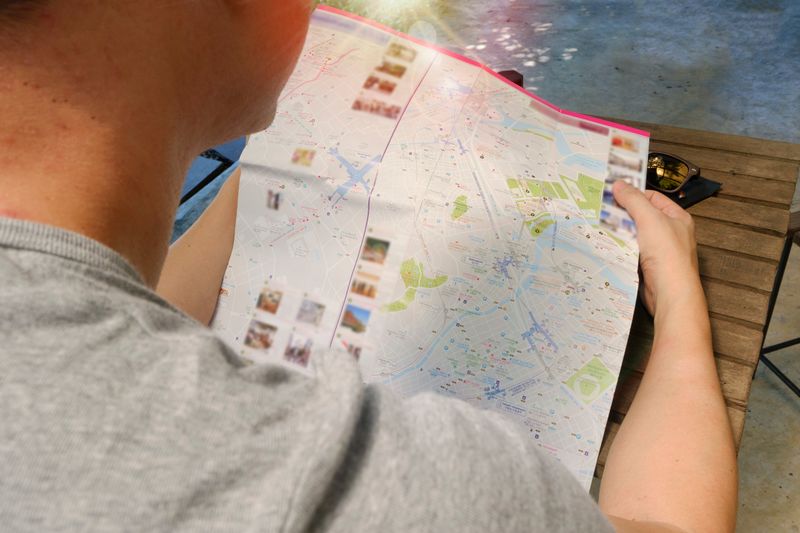
For most people, breaking a long descent with a coffee stop lets the muscles recover briefly and makes a surprising difference. Maps showing contours rather than only streets change how you plan here more than any other planning tool.
Recovering
Soreness that peaks a day or two after a long descent is normal and resolves on its own within a few days. Gentle walking on flat ground the next day generally feels better than complete rest, though this varies between people. Sharp pain in a joint, as opposed to diffuse muscle soreness, is a different thing and is worth taking seriously.
On an ordinary week, anyone with persistent joint pain should speak to a qualified professional rather than working through it on holiday. Planning a flat day after a hill day is the simplest scheduling fix and costs nothing.
The takeaway
Short steps, bent knees, grippy soles. The descents are what you will feel.
The version you keep doing is the version that works.
Questions readers ask
Why am I sore two days later?
Descending loads muscles while they lengthen, which causes delayed soreness. It peaks a day or two afterwards, so the cause is easy to misattribute.
Is it better to walk up or down?
Up is harder on the lungs, down is harder on the knees and joints. If your knees are the weak point, ride down and walk up.
Also by Inês Carvalho
- How to order coffee in Lisbon without overthinking itCafés & Coffee
- The hills are the transport systemPracticalities
- Sintra in a day, done properlyDay Trips
- What catches visitors outPracticalities