Day Trips
Walking the coast, and what the wind decides
The cliff paths west of the city are exposed, sustained and much more affected by wind than by temperature.

What follows is the working version of coastal walking: the decisions in the order you actually meet them, with the reasoning attached.
Before you start
- The prevailing northwesterly builds through the afternoon in summer.
- Cliff edges here are undercut in places and not always fenced.
- Walking north to south usually puts the wind behind you.
Wind is the variable that matters
A coastal walk in a strong headwind takes far longer and costs far more effort than the distance suggests. The prevailing summer wind is northwesterly and builds through the afternoon rather than blowing steadily all day. Walking north to south therefore often means the wind pushes rather than fights you.
Checking a wind forecast rather than a temperature one is the single most useful preparation.
The cliffs are real cliffs
Sections of the coast are high, exposed and eroding, with undercut edges that are not obvious from above. Fencing is intermittent and in places absent entirely. Standing near an edge in gusting wind is the specific combination that causes accidents.
Staying back from the lip is worth doing even where it looks solid.
Sand, dune and heath
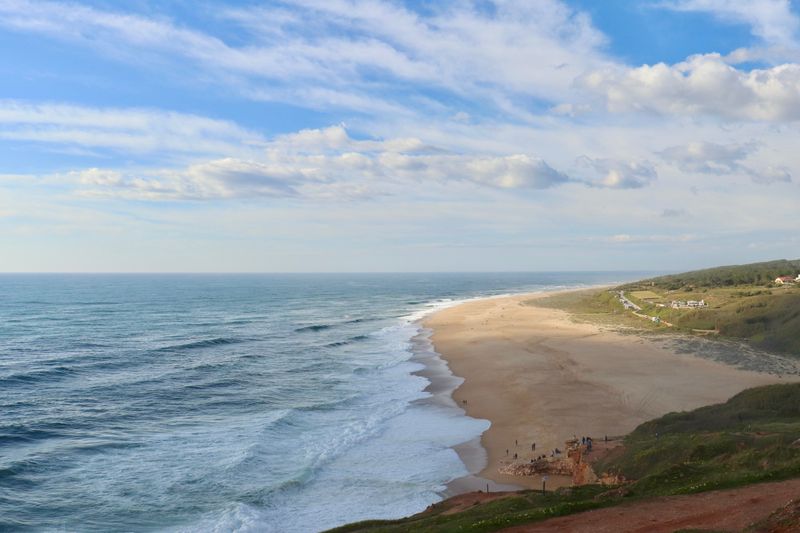
The coastal strip alternates between cliff, dune systems and low scrub, and the walking underfoot changes constantly. Soft sand is exhausting and roughly doubles the effort of the same distance on a path. Dune vegetation is fragile and is the thing holding the dune in place, which is why boardwalks exist.
Where it helps most, following marked routes is a conservation measure rather than a bureaucratic one.
Sun exposure
There is very little shade on an exposed coast and the reflected light from sand and water increases exposure. The wind masks how much sun you are getting, which is why coastal sunburn is so common. Water is not available between towns and there are long stretches with nothing at all.
Carrying more water than seems necessary is the standard local advice.
Linking transport
Several stretches can be walked between two stations or bus stops, which removes the need to double back. Bus services along the coast are less frequent than trains and can be sparse at weekends. Confirming the return service before starting a linear walk is the difference between a good day and a long wait.
Timetables change seasonally, so check on the day.
The reward
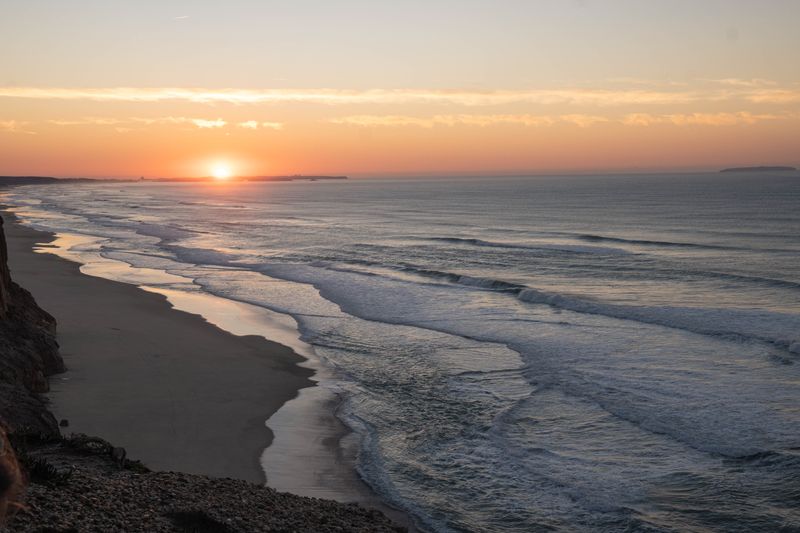
The Atlantic edge west of the city is genuinely dramatic, with long empty stretches within an hour of a capital. Out of season you can walk for hours and see almost nobody. Sunset over open ocean from a westward-facing cliff is the best free thing in the region.
Where it helps most, it is also the coldest place to stand once the sun goes, so plan the way back.
If that does not fit your week, it is not a failure of willpower.
Having a way off the path
Cliff routes here run roughly parallel to a road for much of their length, and knowing where the connecting tracks come up is what turns a deteriorating day into a short walk to a bus stop. Wind rather than rain is the usual reason to abandon a walk, because a gusting crosswind on an exposed edge is both exhausting and precisely the condition in which people lose their footing.
The useful part is this: mobile coverage along the coast is generally decent but not continuous, and the dune hollows and the foot of the cliffs are exactly where it drops, so a downloaded offline map is worth more than a signal. The emergency number is the same across the bloc, and being able to name the stretch of coast and the last town you passed is far more useful to a dispatcher than any coordinates you attempt to read out.
The takeaway
Check the wind, walk with it behind you, carry more water than you think, and stay back from the edge.
The version you keep doing is the version that works.
Questions readers ask
Are the paths waymarked?
Some are, to varying standards, and some are informal tracks along a cliff top. A downloaded offline map is worth having.
Is it safe to walk alone?
The risks are terrain, wind, sun and lack of water rather than anything social. Tell someone your route if you are going somewhere remote.