Practicalities
The lifts and funiculars are public transport, not rides
The vertical machines in the city exist because the hills do. Treating them as attractions rather than as infrastructure is what produces the queues.

This looks at lifts and funiculars from the practical end — what holds up once conditions stop being ideal.
What holds up in practice
- They were built to solve gradients for residents, not for visitors.
- They are integrated into the transport network and its ticketing.
- Stairs alongside are often faster than the queue.
Why they exist at all
The city is built across steep hills, and moving people up and down them was a genuine engineering problem long before tourism existed. Funiculars solve a slope with two counterbalanced cars on a cable, so one descending car helps lift the other, which is efficient on a fixed gradient.
A vertical lift solves a cliff-like drop where no street can reasonably climb, and it does so in a very small footprint. Both were built as ordinary urban infrastructure, in the same spirit as a bridge or a staircase, and both are still used that way. They remain part of the public network rather than being separate attractions, which is the fact most visitors miss.
How the queues happen
These machines carry small numbers of people per trip, so demand from a busy street overwhelms them almost immediately. A short line of visitors at a funicular can mean a long wait, because the cycle time is fixed by the length of the slope. Residents needing to get up the hill are in the same queue, which is the source of a good deal of quiet irritation.
On an ordinary week, the queue is worst in the middle of the day and largely disappears early and late, which is entirely predictable. Nothing about the ride improves with a crowd, since the interest is the gradient rather than the company.
The stairs beside them
Almost every one of these machines has a street or a staircase running alongside it, because that is what it was built to replace. Walking up is usually faster than queueing, and it is free, and it gives you the same view in a less compressed form. Walking down is faster still and is the sensible default unless you have luggage, a pram or difficulty with steps.
The exception is the vertical lift, where the drop is genuinely severe and the walking alternative is a substantial detour. Knowing which is which turns these machines from a queueing problem into an occasional convenience.
Tickets and how they work
These services sit within the city transport system, so a travel card loaded appropriately generally covers them. Buying a single fare on board is typically much more expensive than travelling on a card, which is the usual pattern for urban transport.
In practice, because arrangements change, checking the current rules at a station or on official information is worth the two minutes. Day passes covering the network are usually the sensible choice for anyone intending to use several of these in one day.
Paying a premium on board once, by accident, is the most common small financial mistake visitors make here.
Using them as transport
The genuinely useful move is to take a lift or funicular in the direction you were going anyway, rather than as a destination. Ending a long uphill walk with a mechanical ascent, or starting a descent with one, saves the part of the day that costs most. Because they connect specific streets, they make certain routes across the city far less punishing than the map suggests.
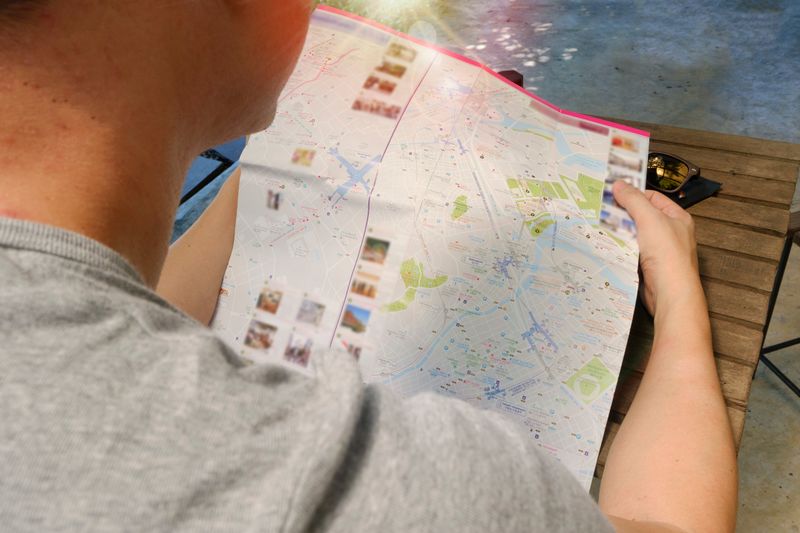
Working out which ones sit on your regular route is worth ten minutes with a map at the start of a stay. Residents use them exactly this way, in ones and twos, without ceremony or photographs.
What to expect on board
The cars are small, wooden and old in several cases, and they are maintained as working vehicles rather than as museum pieces. They are frequently full, and standing is normal, and the ride lasts a minute or two rather than being an excursion. The gradient is steep enough that the floors of some cars are stepped, which is a good clue to how serious the slope is.
Where it helps most, views from inside are partly blocked by other passengers, which is another argument for walking one direction. Treating them as a short useful journey rather than an experience produces a much better relationship with them.
The takeaway
Ride them when you were going that way anyway. Otherwise take the stairs beside them.
Pick the one that costs you least, and let the rest wait.
Questions readers ask
Are they worth queueing for?
Rarely. There are usually stairs or a street alongside, and walking up is often faster than waiting. Use them when they are on your route.
Are they covered by a travel card?
Generally yes, and buying a single fare on board is usually far more expensive. Check the current arrangements when you load your card.
Also by Inês Carvalho
- How to order coffee in Lisbon without overthinking itCafés & Coffee
- The hills are the transport systemPracticalities
- Sintra in a day, done properlyDay Trips
- What catches visitors outPracticalities